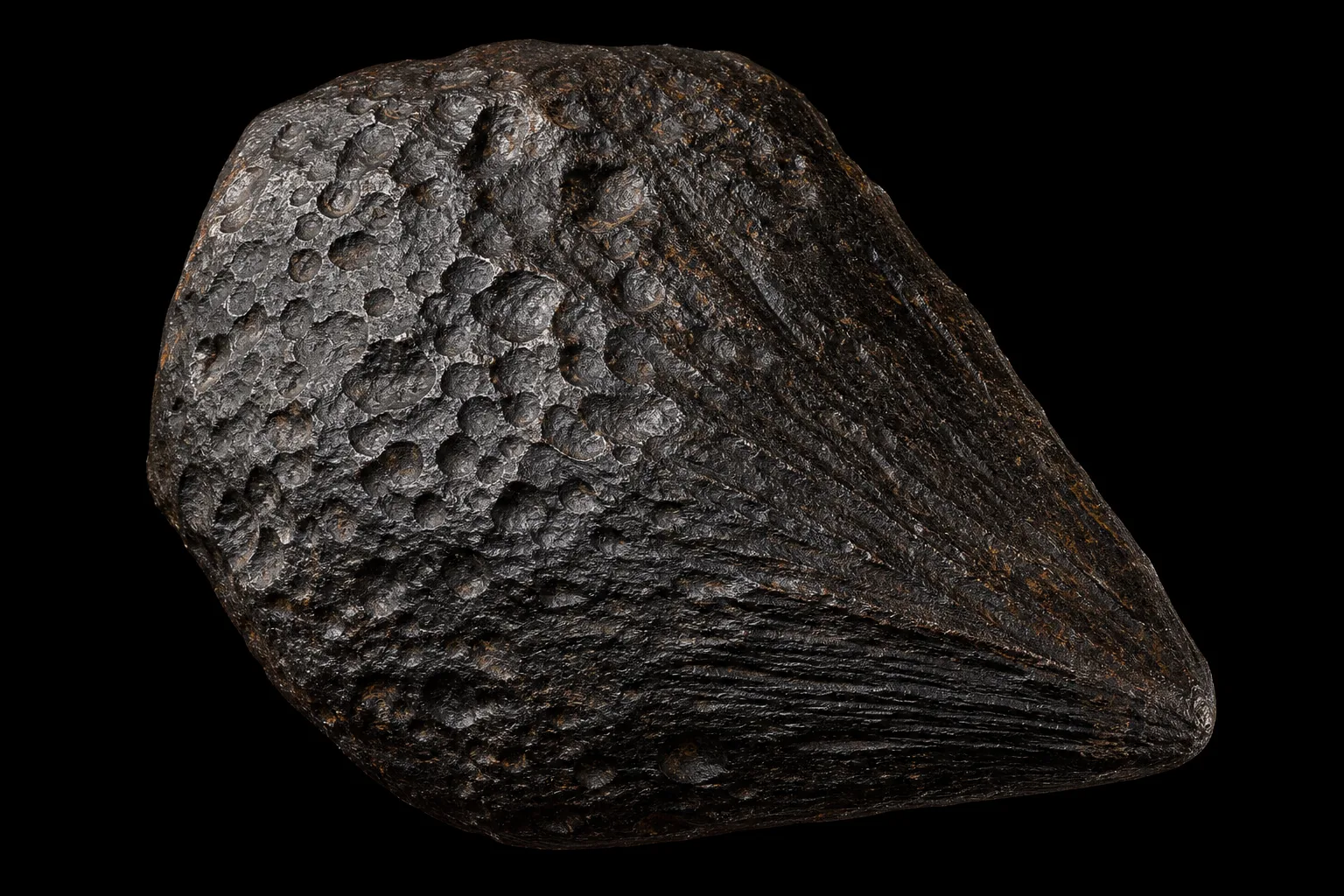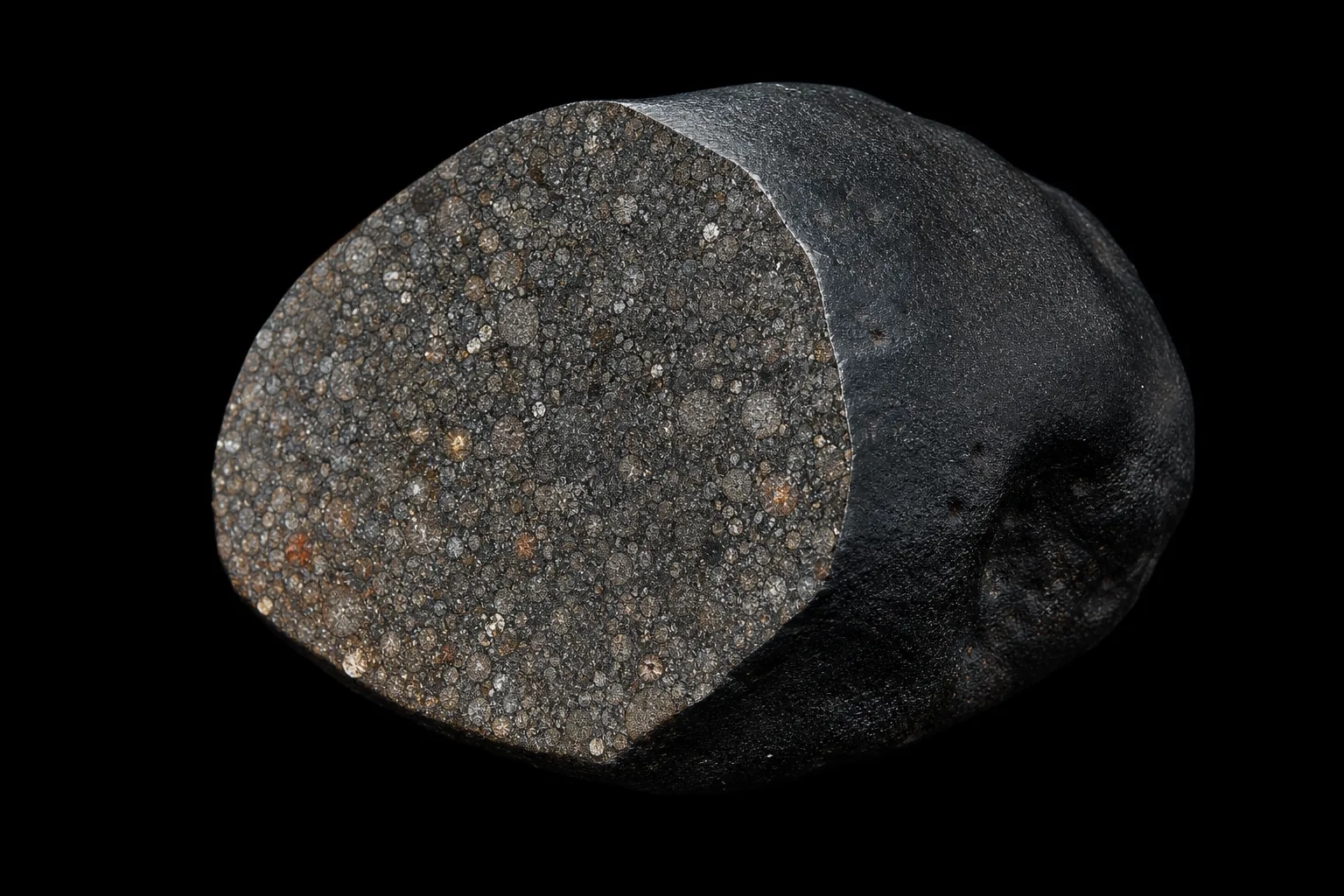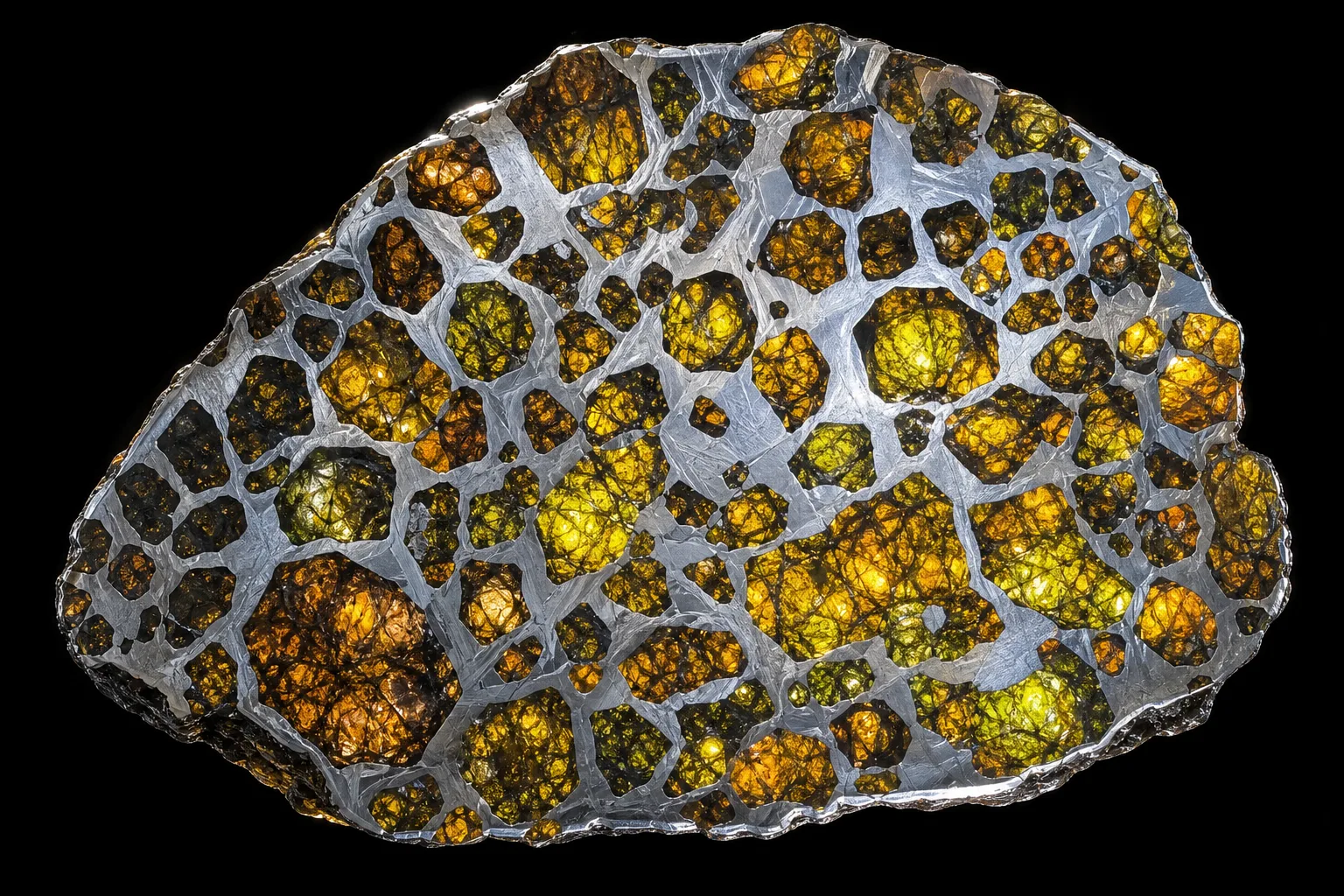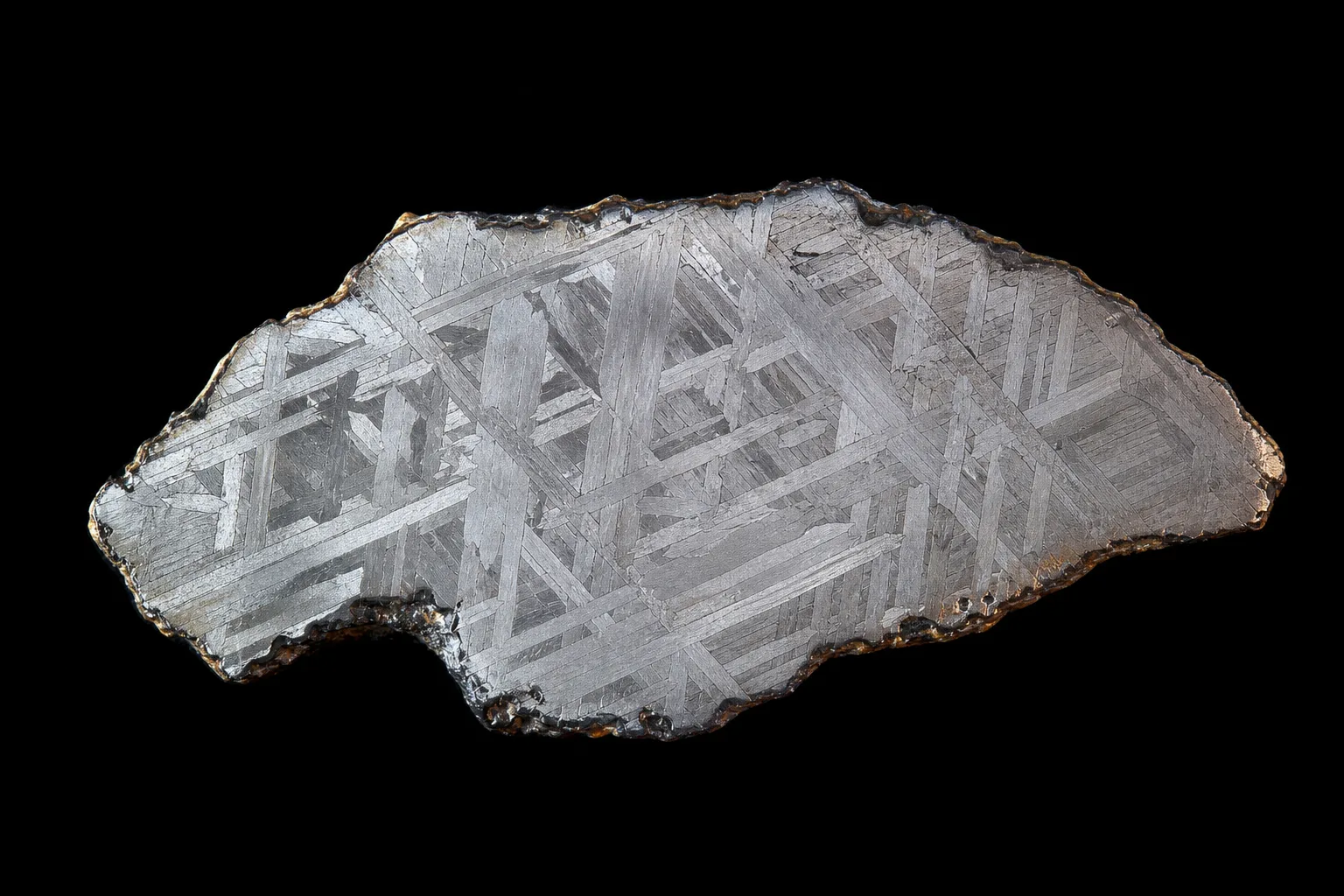
Kell Basin is the iron we reach for when someone wants to understand what a meteorite actually is. Slice a nickel-iron mass, polish the face, and swab it with dilute acid, and a geometric lattice of interlocking bands rises out of the metal — the Widmanstätten pattern, a crystal structure that can only form when molten metal cools a few degrees every million years. You are looking at the frozen core of a small planet that broke apart before Earth finished forming.
This particular mass is a fine octahedrite, meaning the bands are tight and crisp rather than broad. The etch on our reference slices is exceptional: clean kamacite and taenite contrast, no rust bloom, and only minor terrestrial weathering at the edges. Each slice ships sealed against humidity, because an un-cared-for iron will freckle with rust within a season in a damp room.
For a first serious specimen it is hard to beat — visually unmistakable, physically dense in the hand, and cheap enough per gram that a display slice will not frighten you. We grade it 9.2: a point off only because the mass is common enough that it will never be rare.