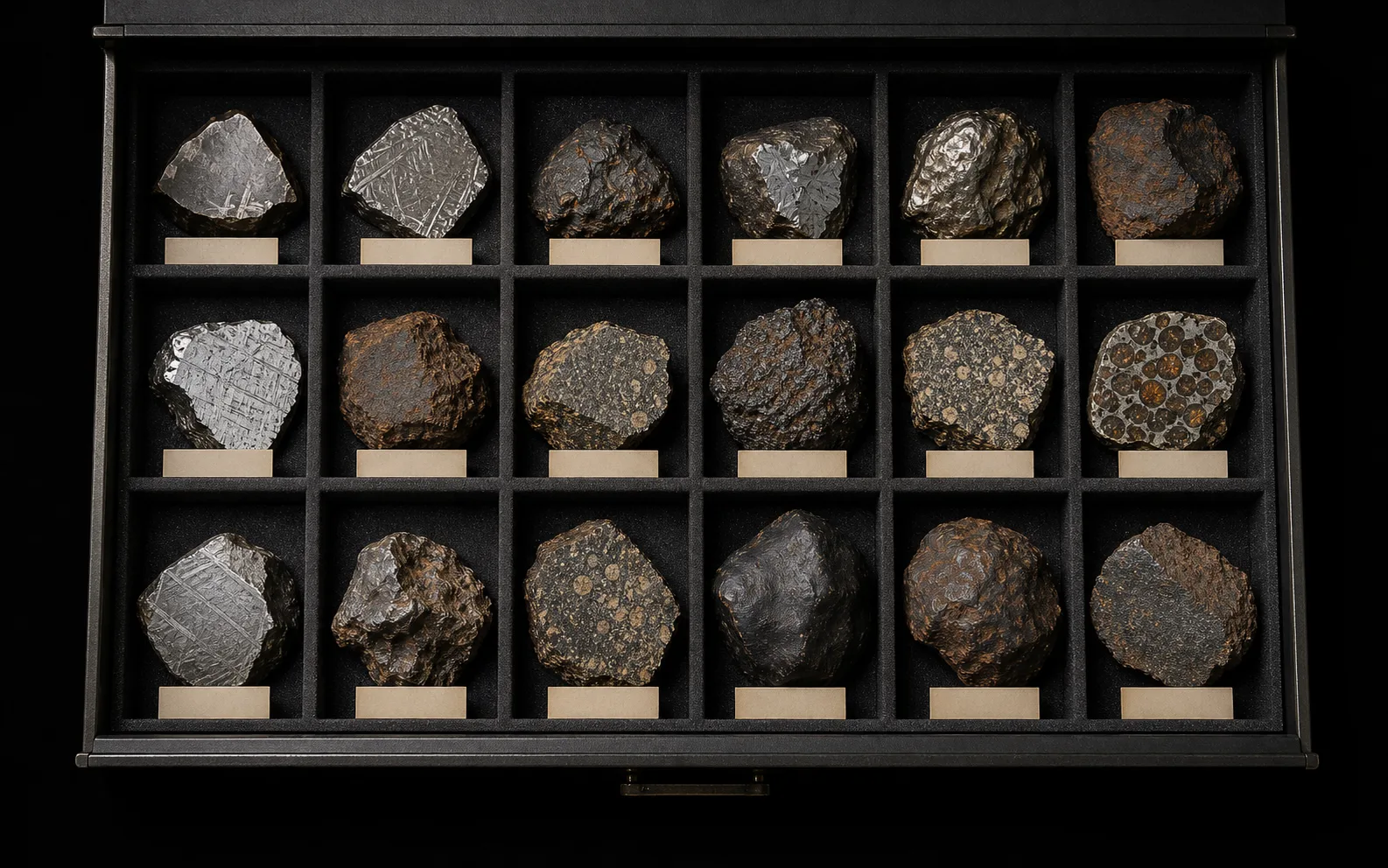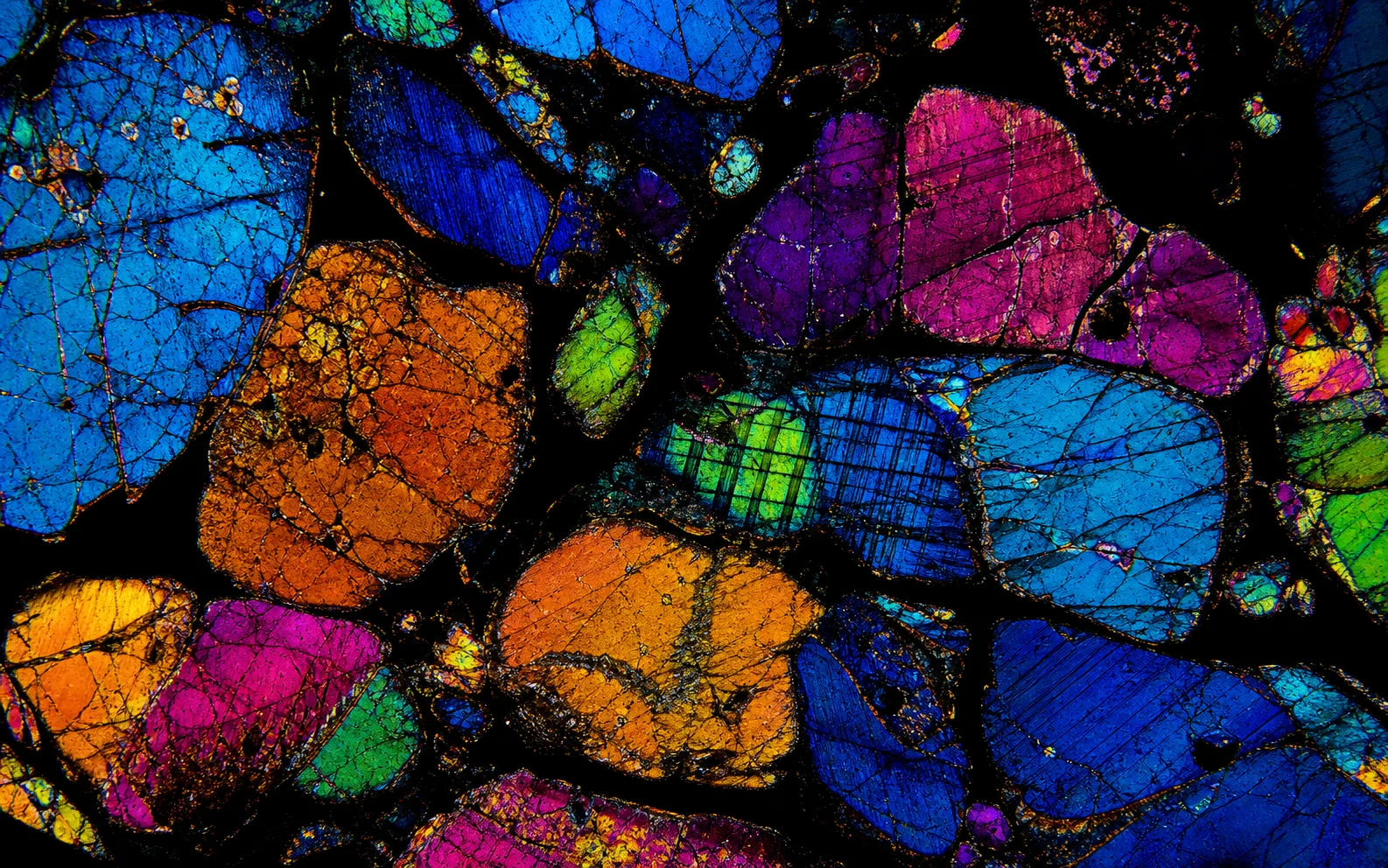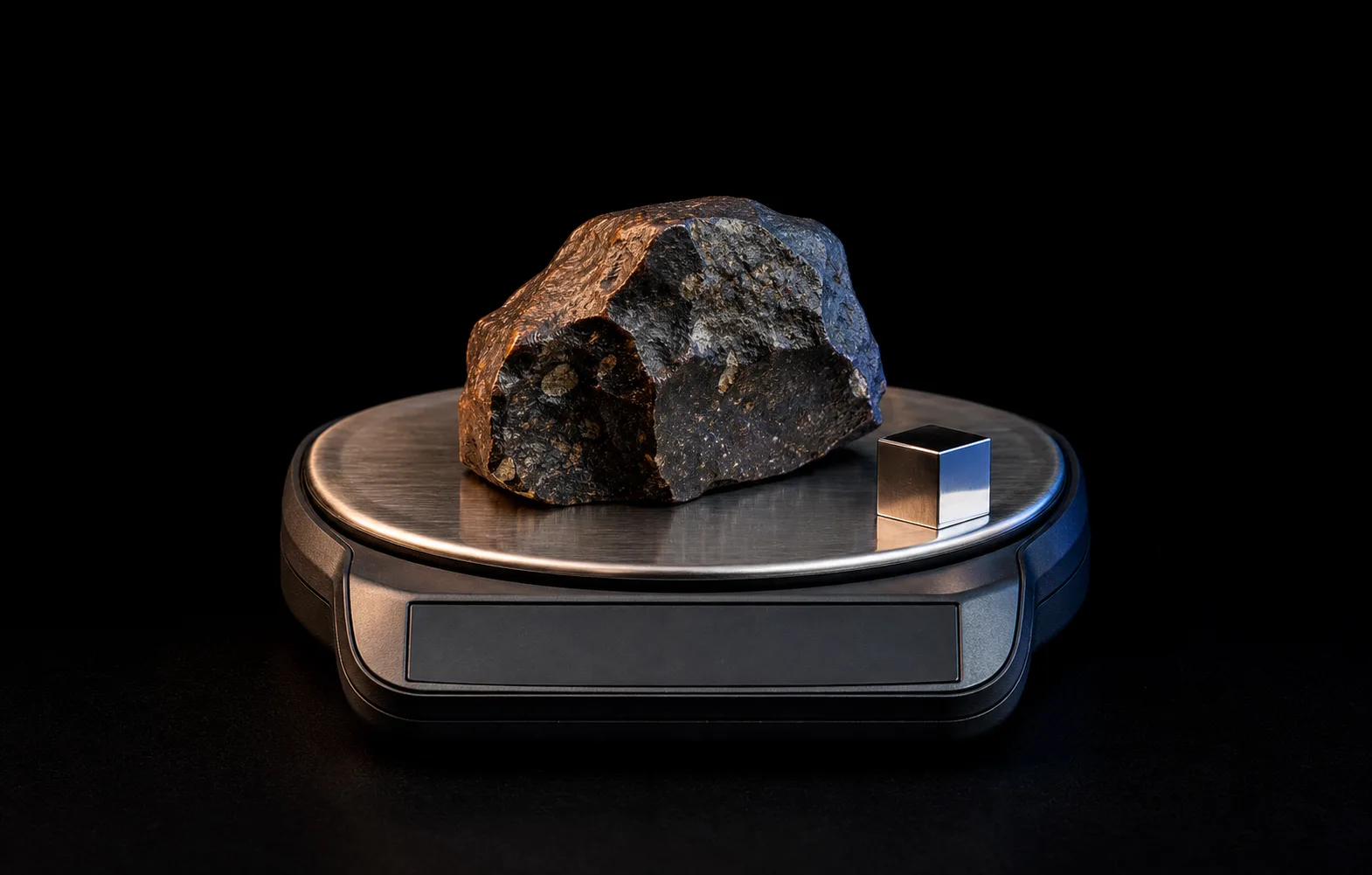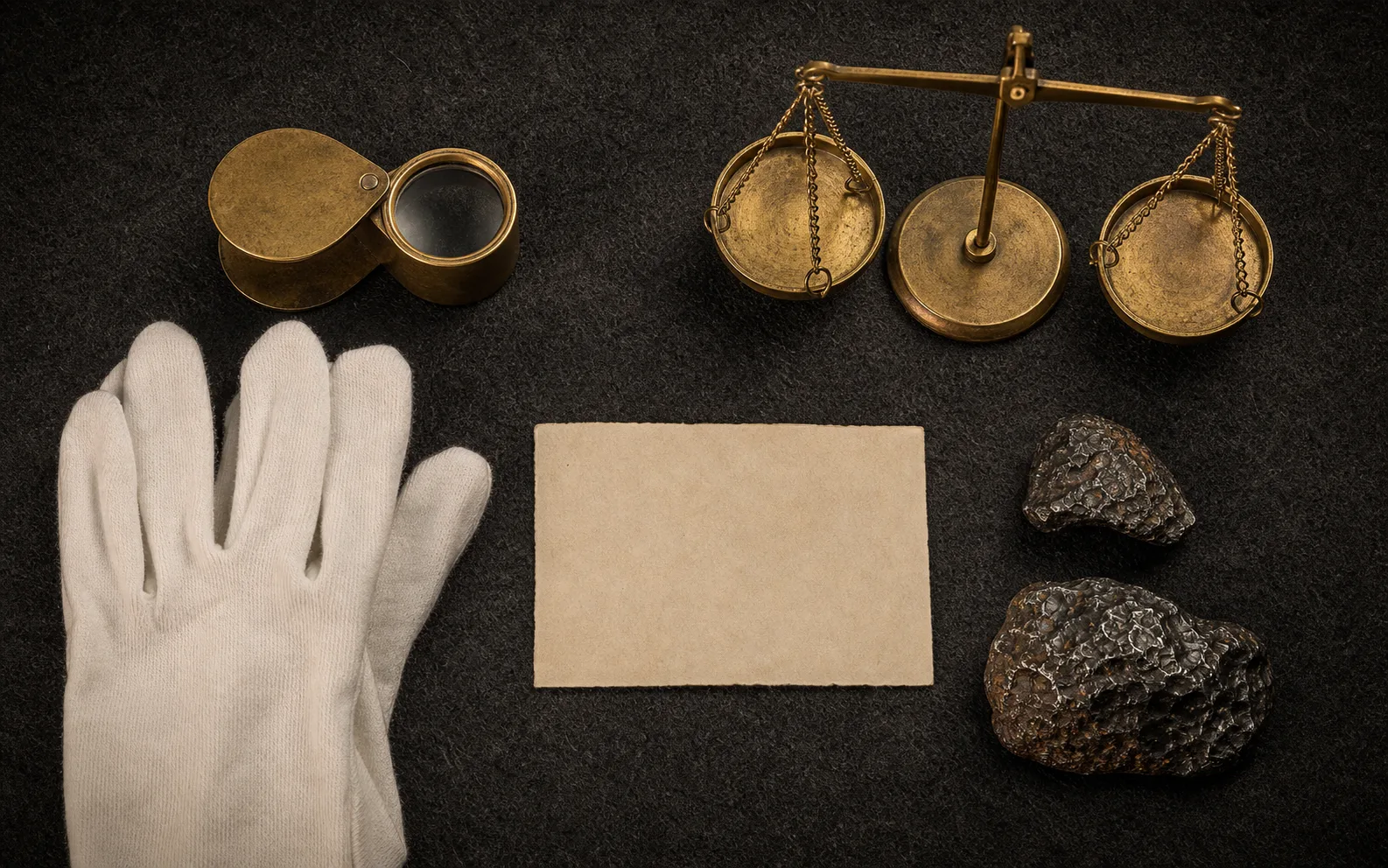
There is a particular heartbreak in meteorite collecting: watching a beautiful iron slice slowly destroy itself. It begins as a few orange spots that weep a little moisture, spreads into blisters that lift the polished surface, and ends, over a few years of neglect, in cracks and flaking metal. Collectors call it 'meteorite cancer', and the culprit is chemistry the specimen picked up long before you owned it.
During their time on Earth, many irons absorb chloride ions. Combined with humidity, those chlorides drive the formation of a mineral called akaganeite, which expands as it grows and pries the metal apart from within. Because the chloride is already inside the specimen, you cannot simply clean it off; you can only deny it the moisture it needs to react. That is why the entire care routine for irons comes down to one word: dry.
Kept below fifty percent humidity in a sealed case with silica gel, an iron is stable indefinitely — the akaganeite has nothing to work with. Left on an open shelf in a damp room, the same specimen can visibly deteriorate in a single winter. It is the one real maintenance task in the hobby, it takes minutes a month, and it is worth writing about because the collectors who lose specimens to it almost always simply did not know.