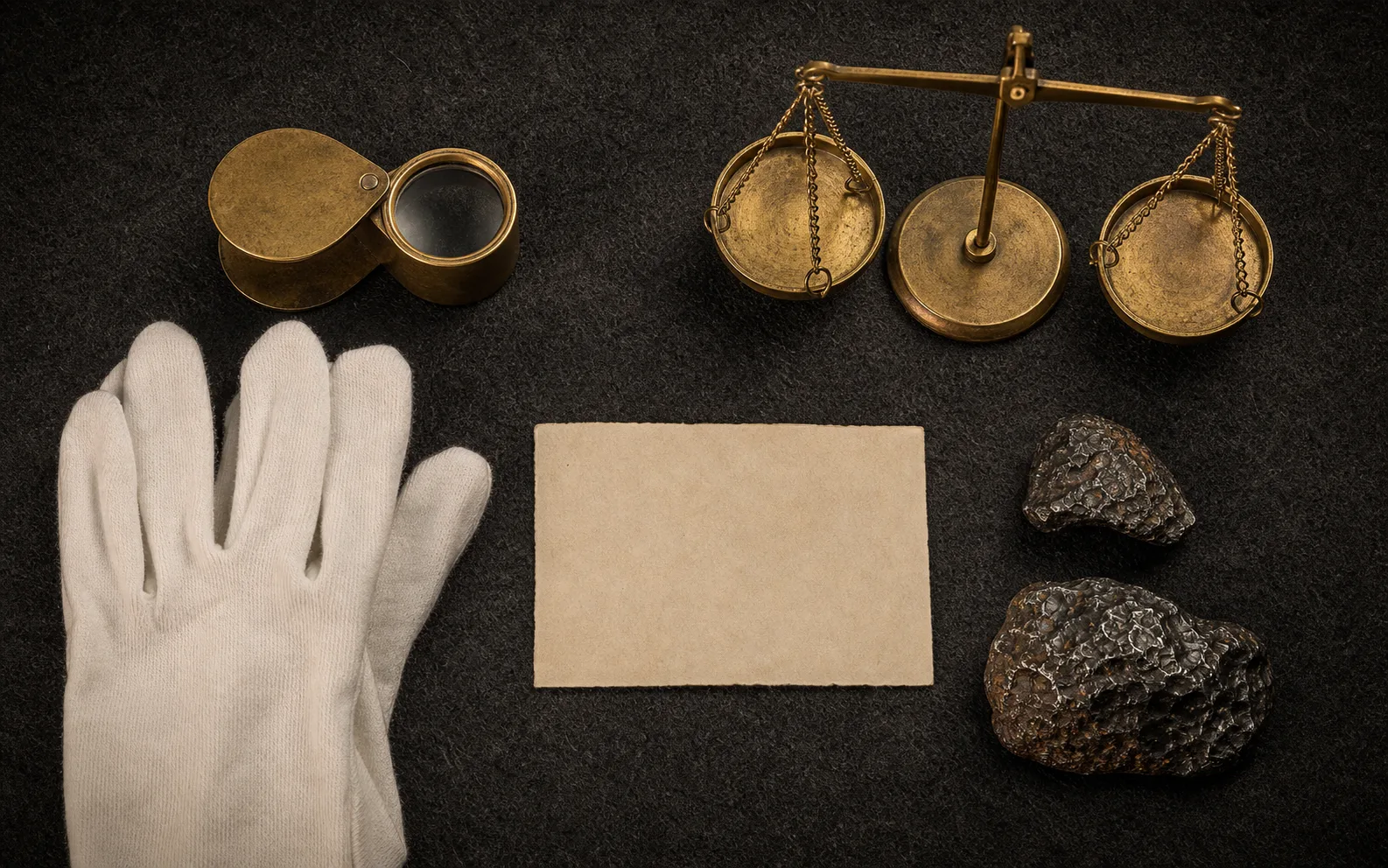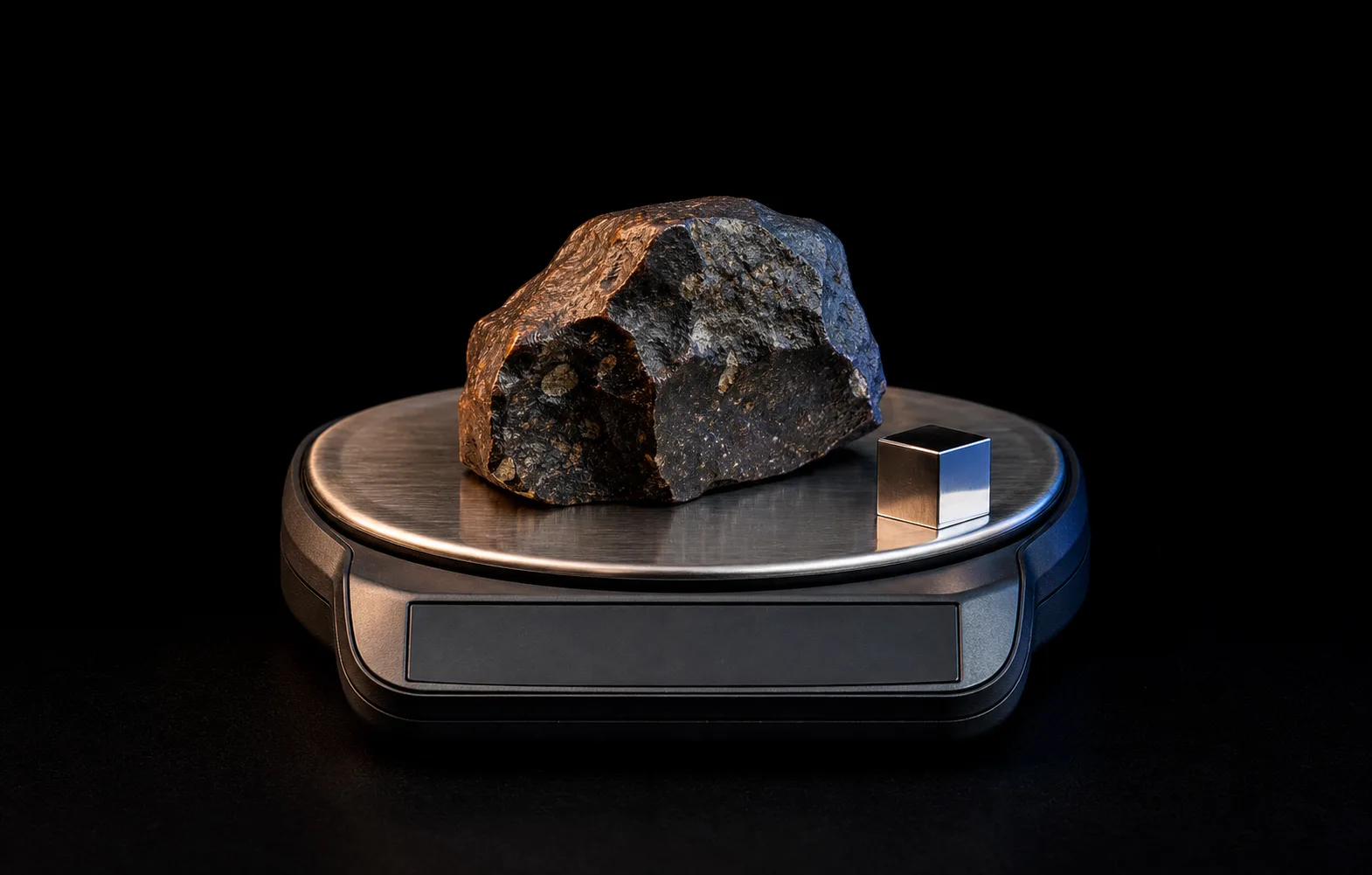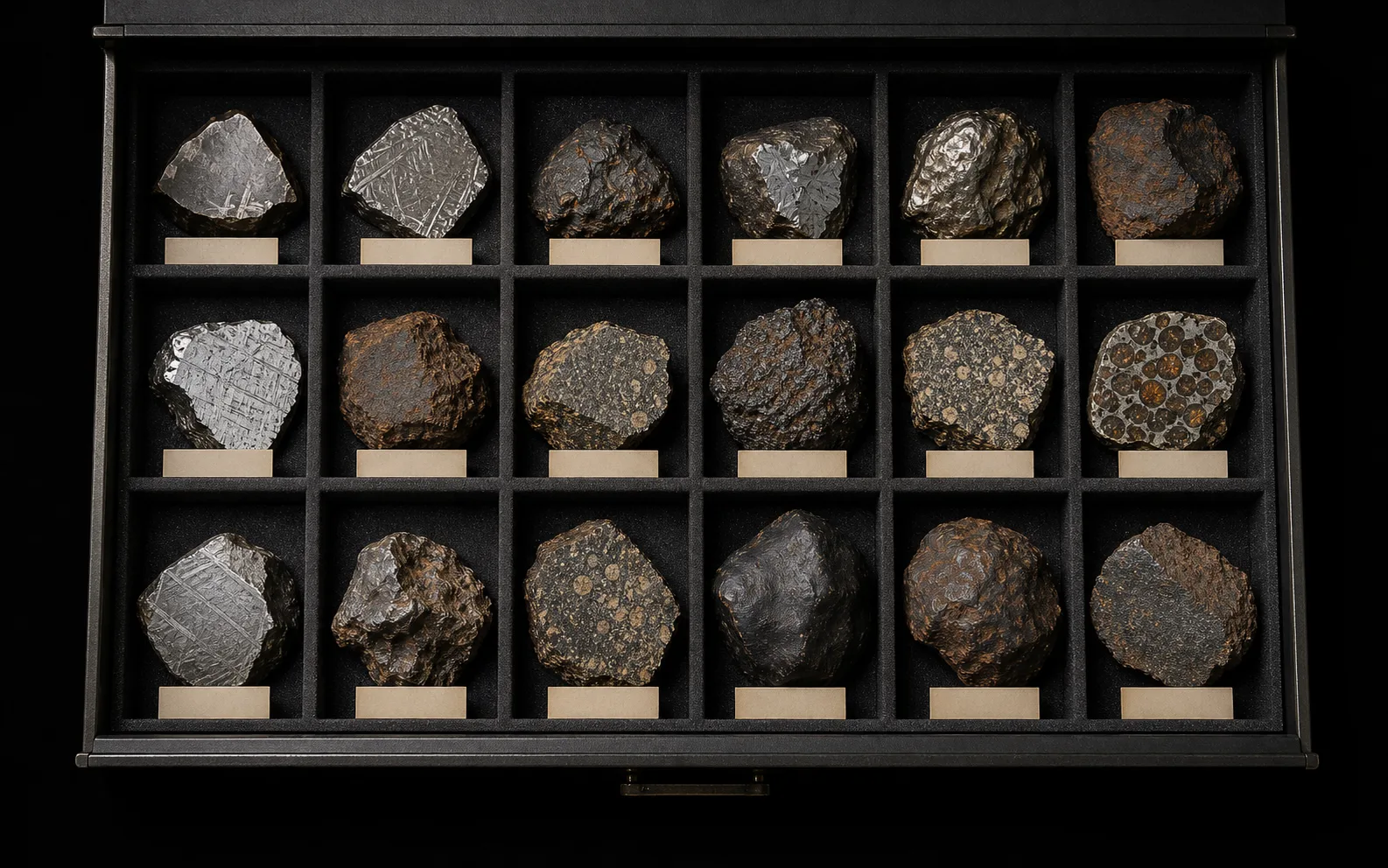
Every specimen that leaves Quant Service AI goes out with a record: its official classification name, the group and type, the total known weight of the fall, where and when it was found, the mass of your individual piece, and photographs against a scale. None of that is decoration. With meteorites, the documentation is a genuine part of the object's value, and a specimen stripped of its provenance has lost something you cannot put back.
The reason is that a meteorite's identity cannot be read off its surface. A grey chondrite fragment could be a common desert find worth twenty pounds or a witnessed fall worth two thousand, and only the paperwork — the name, the Meteoritical Bulletin entry, the chain of custody — tells them apart. Lose the label and you have not just lost information; you have knocked the specimen down to the value of an anonymous rock, because a careful buyer can no longer verify what it is.
So we treat records as seriously as we treat the specimens. We keep our own copy of every classification and provenance we sell, we photograph before despatch, and we will re-issue documentation to any buyer who has kept the specimen but mislaid the card. It is slower and more work, and it is the difference between selling meteorites and selling mystery rocks.