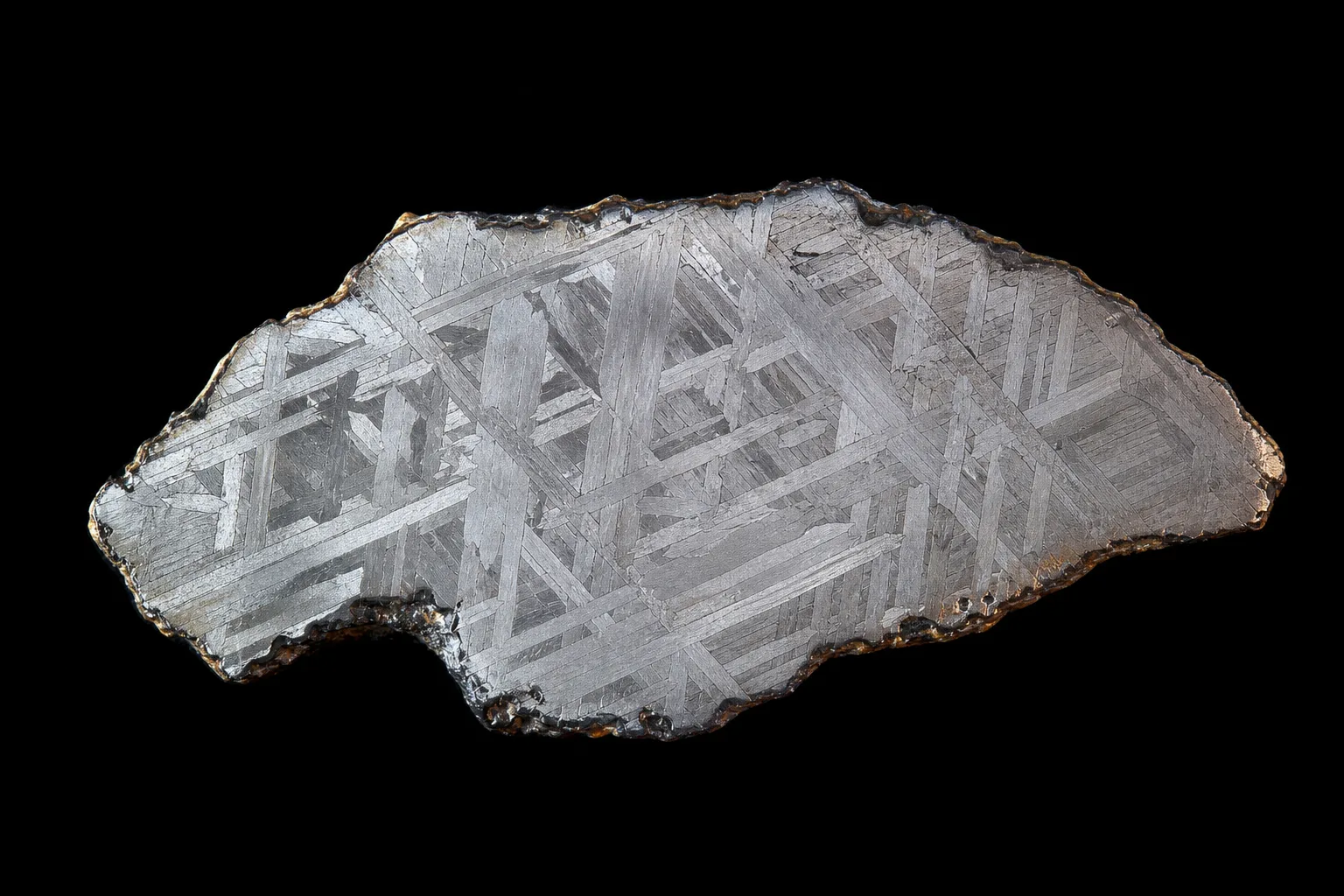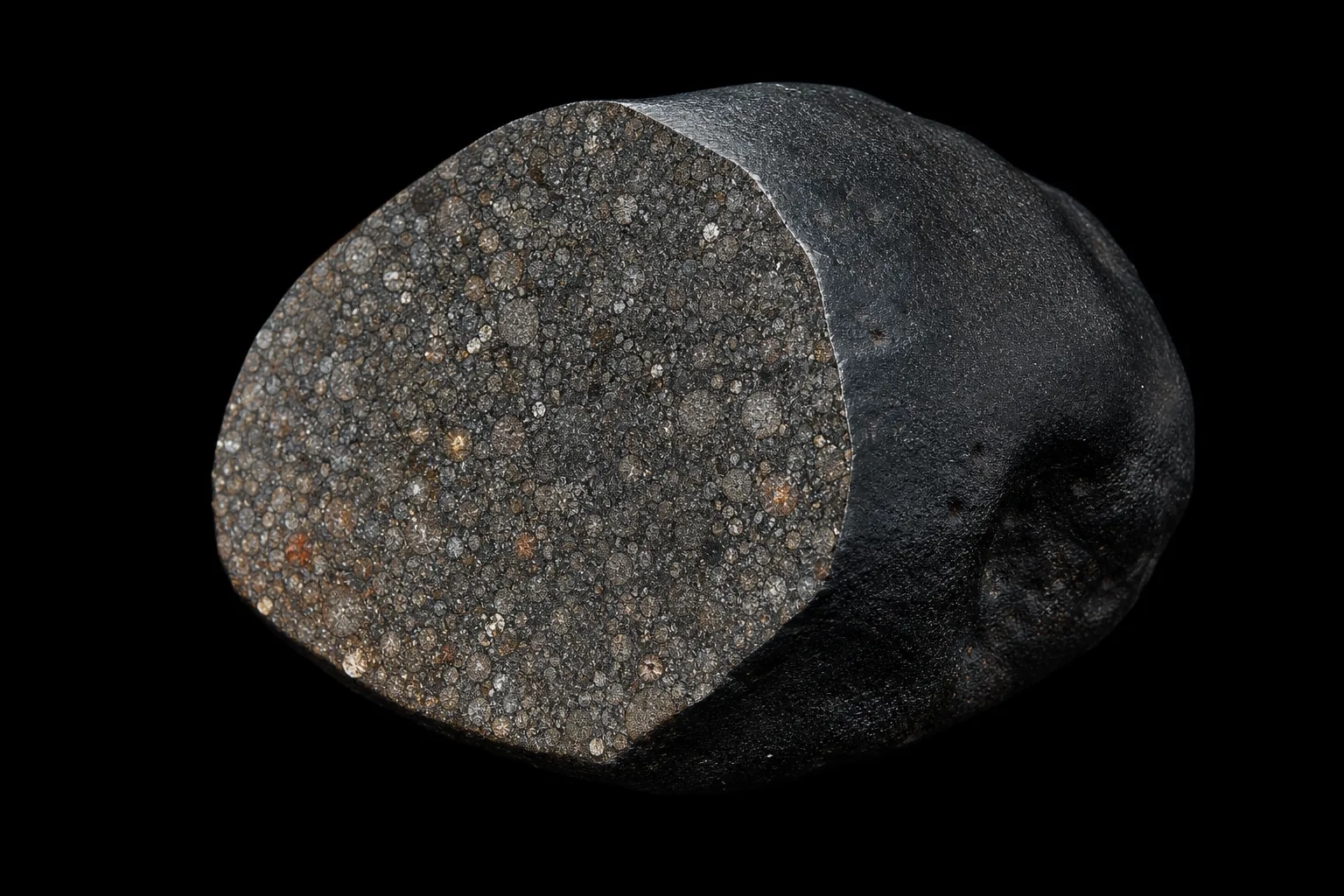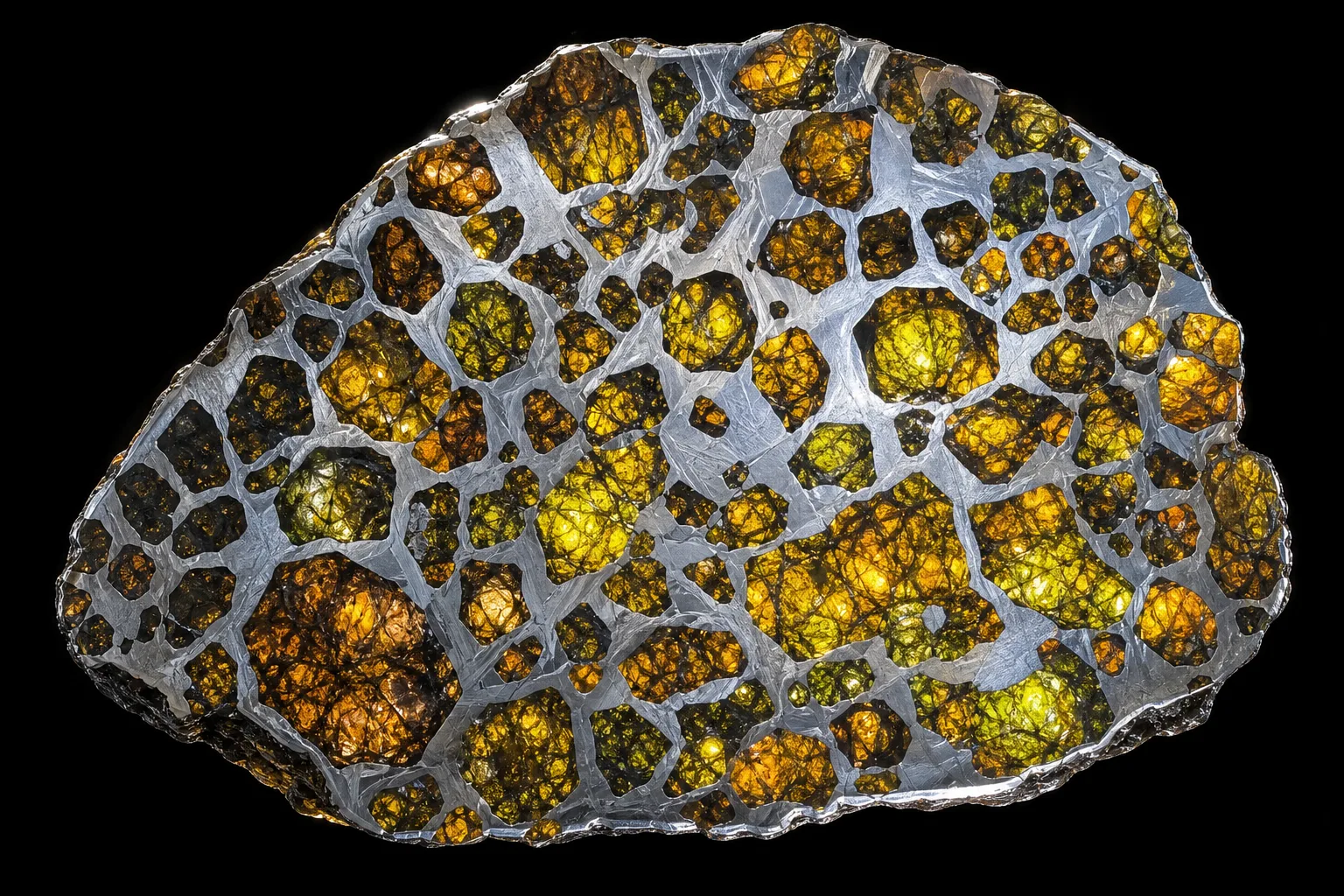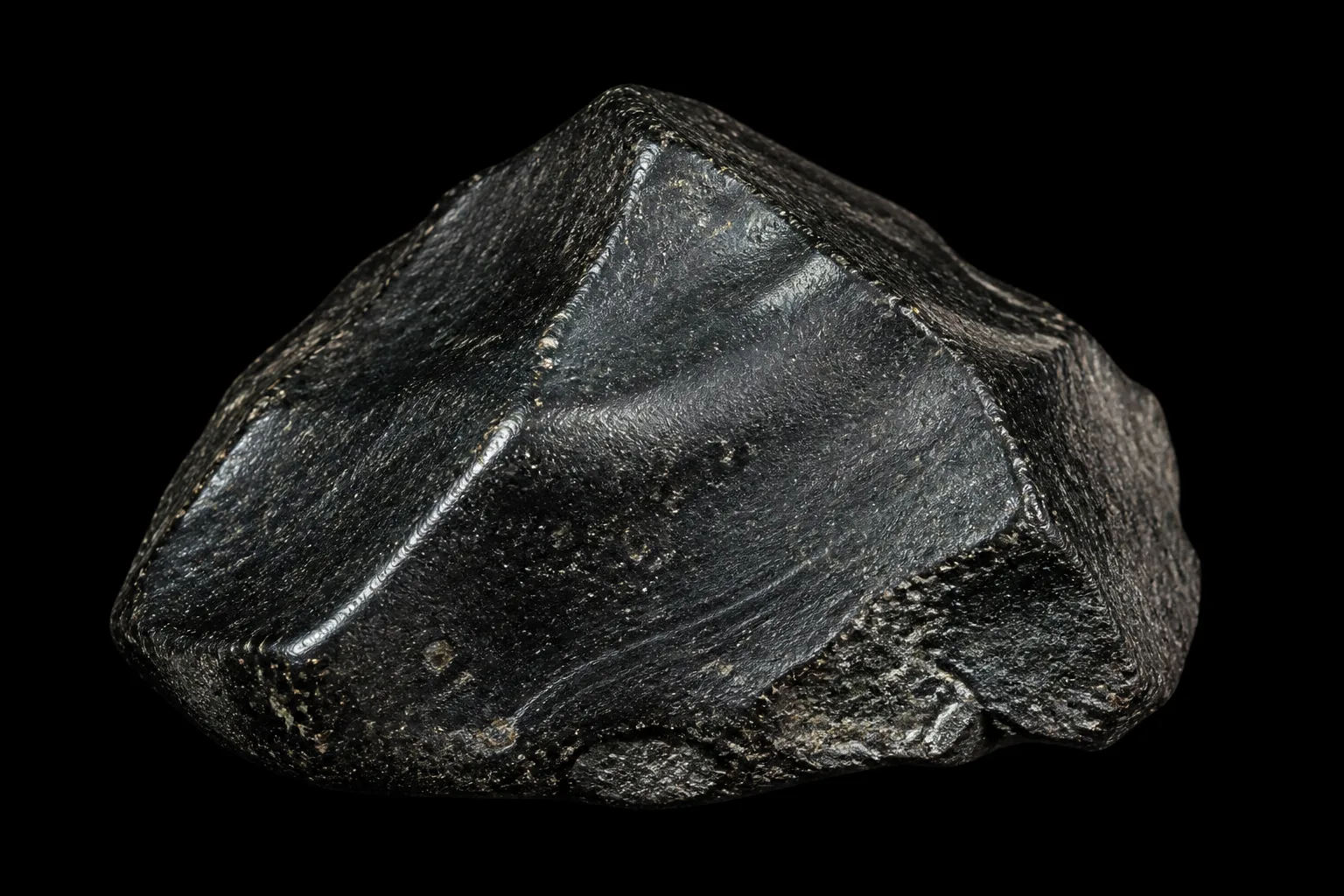
There are only a few hundred kilograms of Mars on Earth, total, and Rubicon is a piece of it. Shergottites are volcanic basalts blasted off the Martian surface by impacts; we can tie them to Mars specifically because tiny pockets of gas trapped in their shock-melted glass match, almost exactly, the composition the Viking landers measured in the Martian atmosphere in 1976. It is one of the most elegant chains of evidence in planetary science.
The material itself is a dense, dark basalt with a greenish-black glassy sheen and a fine crystalline speckle — geologically young by meteorite standards, a mere 180 million years or so. Our fragments are small, because everyone's are, and priced accordingly. Each is sealed, documented, and photographed against a scale before it leaves us.
At 9.5 this is a specimen for a collection that already has its irons and pallasites and wants the thing almost nobody has. It is an enormous amount of money for a very small rock, and it is a piece of another planet. Both statements are true.