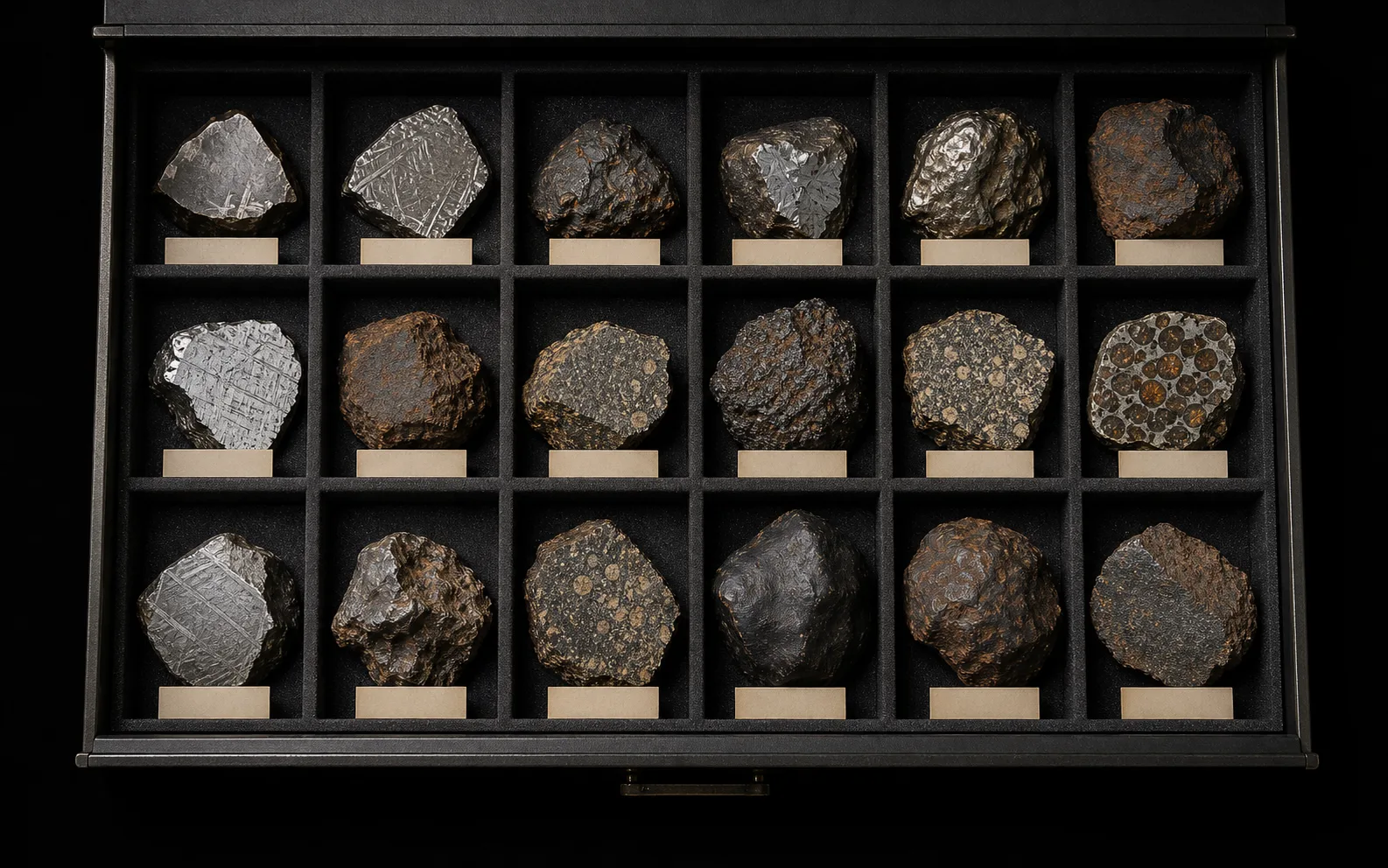
Every specimen in our catalogue carries a registry grade from 1 to 10, and we try to make the number mean something concrete. A grade weighs five things, roughly evenly: authenticity and documentation, rarity of the class, the quality of this particular specimen against others of its type, aesthetics, and value for what it costs. A common chondrite that is a flawless example of its kind can out-grade a rare fragment that is a poor one.
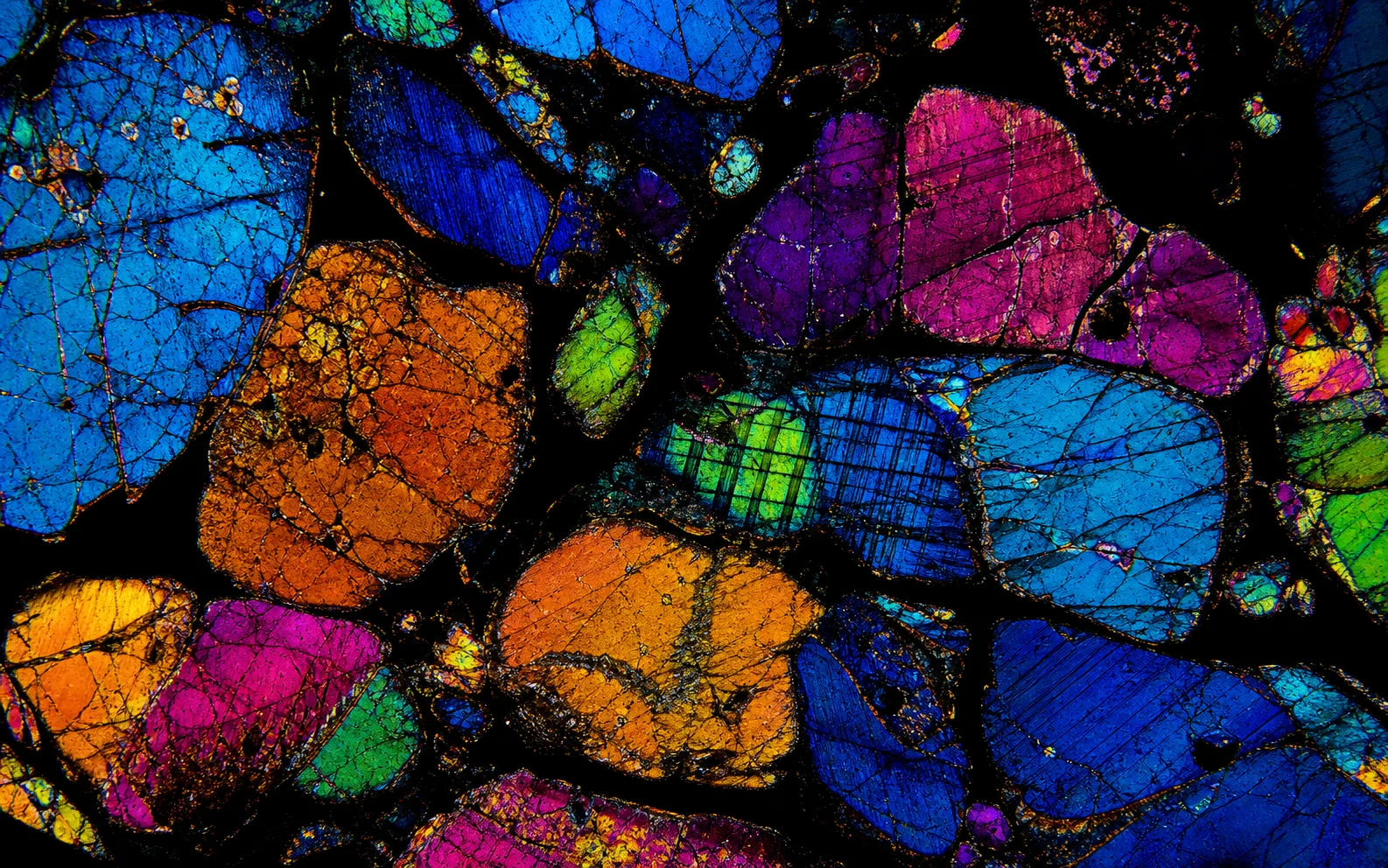
The documentation dimension is non-negotiable and comes first: an unclassified or poorly-provenanced specimen is capped low no matter how pretty it is, because we cannot stand behind what we cannot verify. Rarity and quality then do most of the work in the middle of the scale. Aesthetics matter — a pallasite with clear, colourful olivine grades above a cloudy one — but never enough to rescue a specimen with weak provenance.
Value keeps us honest at the top. It is easy to award a high grade to something expensive; the harder and more useful judgement is whether a specimen is a good buy against its peers. That is why an affordable tektite and a five-figure Martian fragment can both sit in the nines: each is being measured against what it is and what it costs, not against the whole catalogue. The grade is a shorthand — the description is where the real information lives.