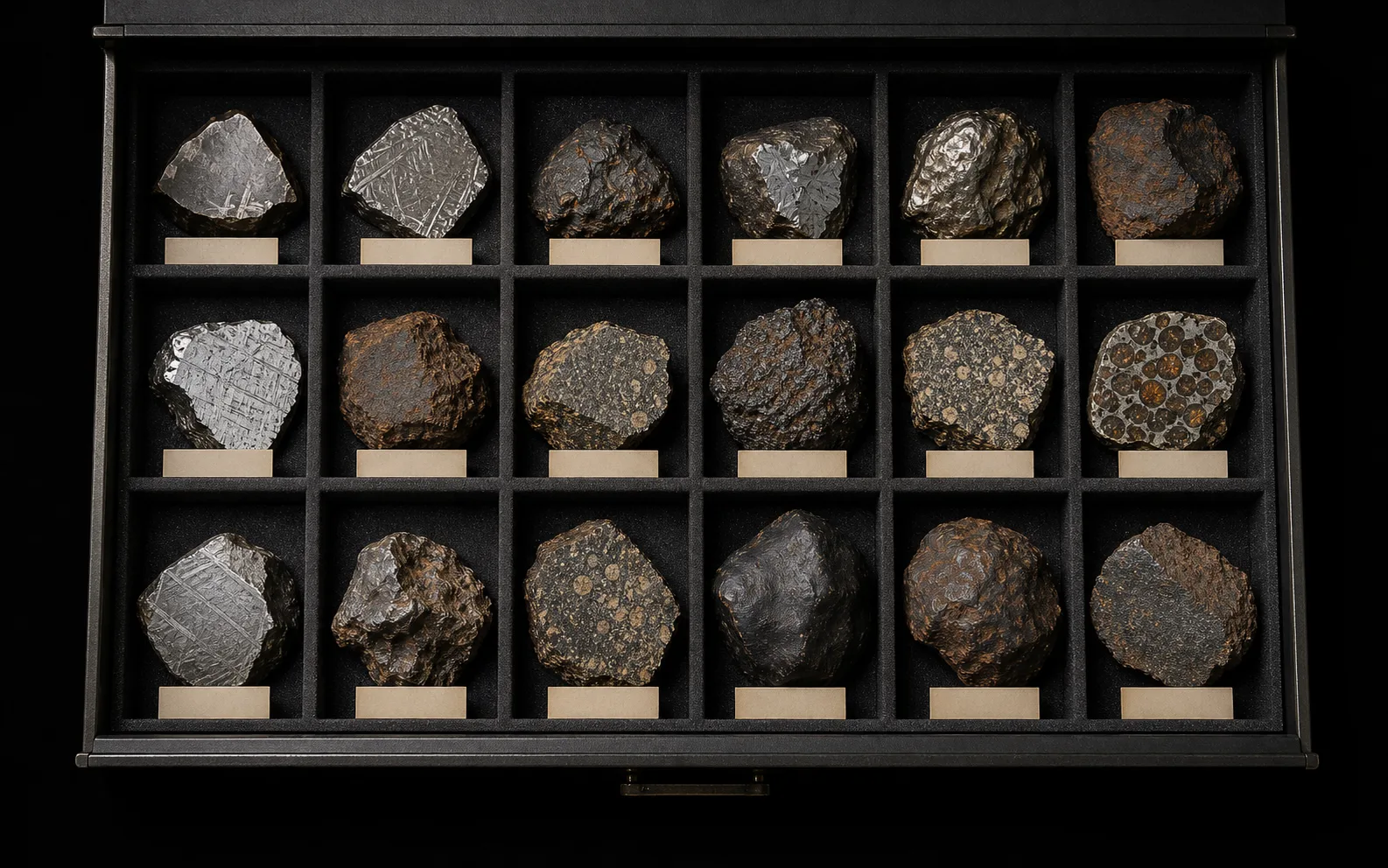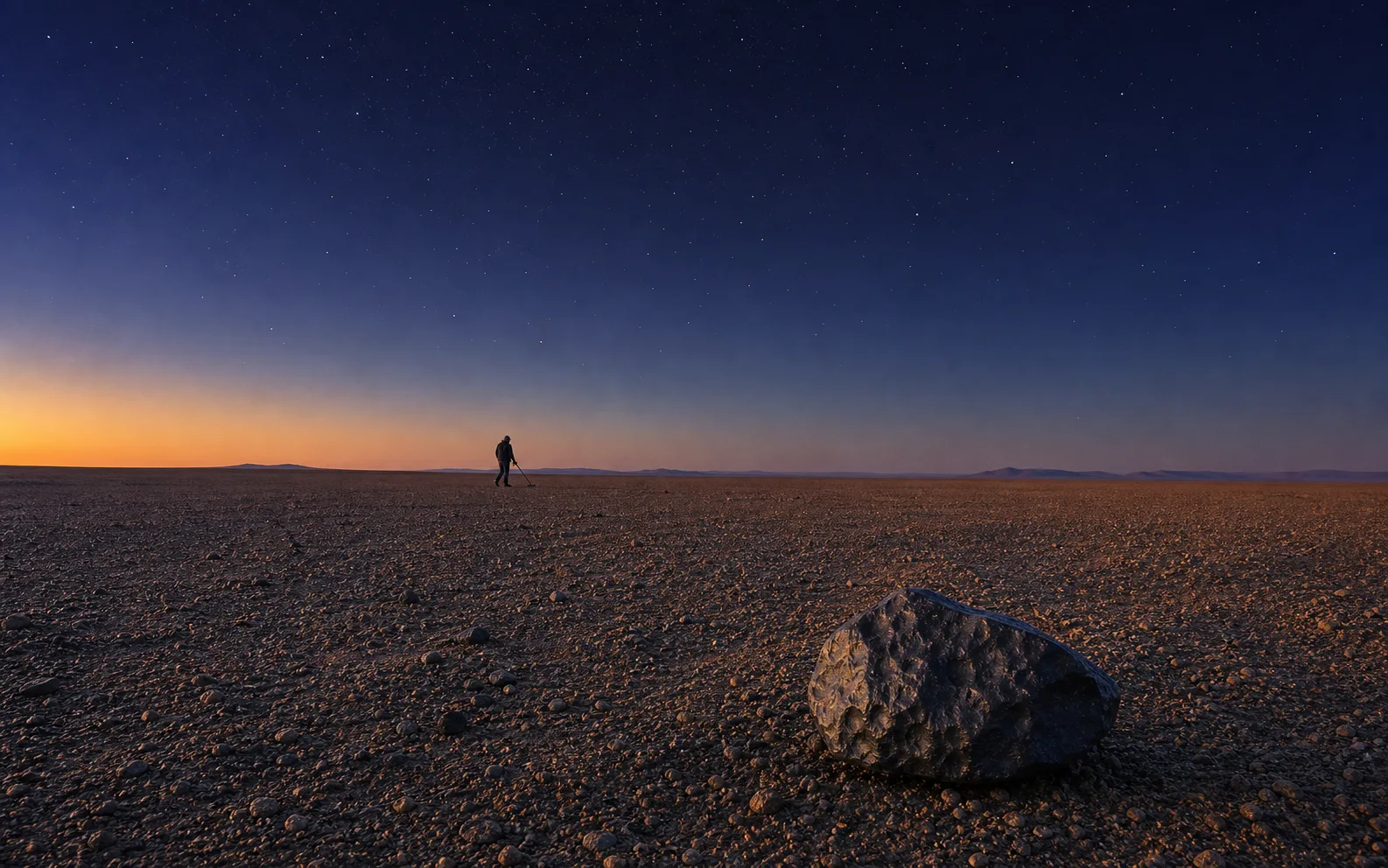
Witnessed falls get the glory, but the deserts of the world — the Sahara, Oman, the Nullarbor, Antarctica — are where most collectable meteorites actually come from, and the desert find is the unsung backbone of the whole hobby. Dry climates preserve meteorites for tens of thousands of years and make them easy to spot: a dark rock on a pale, featureless plain is worth a second look, and dedicated hunters have recovered enormous numbers of them.
Yes, they are weathered. Groundwater and oxygen brown the crust and rust the metal over the millennia, so a desert find lacks the pristine crispness of a fresh fall. But it is still a genuine meteorite, still scientifically classifiable, still four and a half billion years old at heart — and it costs a fraction of a fall. For a collector building breadth, or anyone who simply wants to hold a piece of space without remortgaging, the desert find is the honest, sensible choice.
There is an ethics to it, too: the best material comes from hunters and dealers who record where a specimen was found, cooperate with classification, and do not strip meaning from a stone by selling it anonymously. Buy desert finds, by all means — most of our chondrites are exactly that — but buy the ones that come with a name and a story. Weathered is fine. Anonymous is not.