An iron meteorite is not an inert ornament — it is a chemically unstable alloy that has been dry for millions of years and does not enjoy your living room. The enemy is chloride: tiny amounts absorbed during a specimen's time on Earth react with humidity to produce akaganeite, which shows up as weeping orange spots and, untreated, will crack a specimen apart over years. Collectors call it 'meteorite cancer', and prevention is far easier than cure.
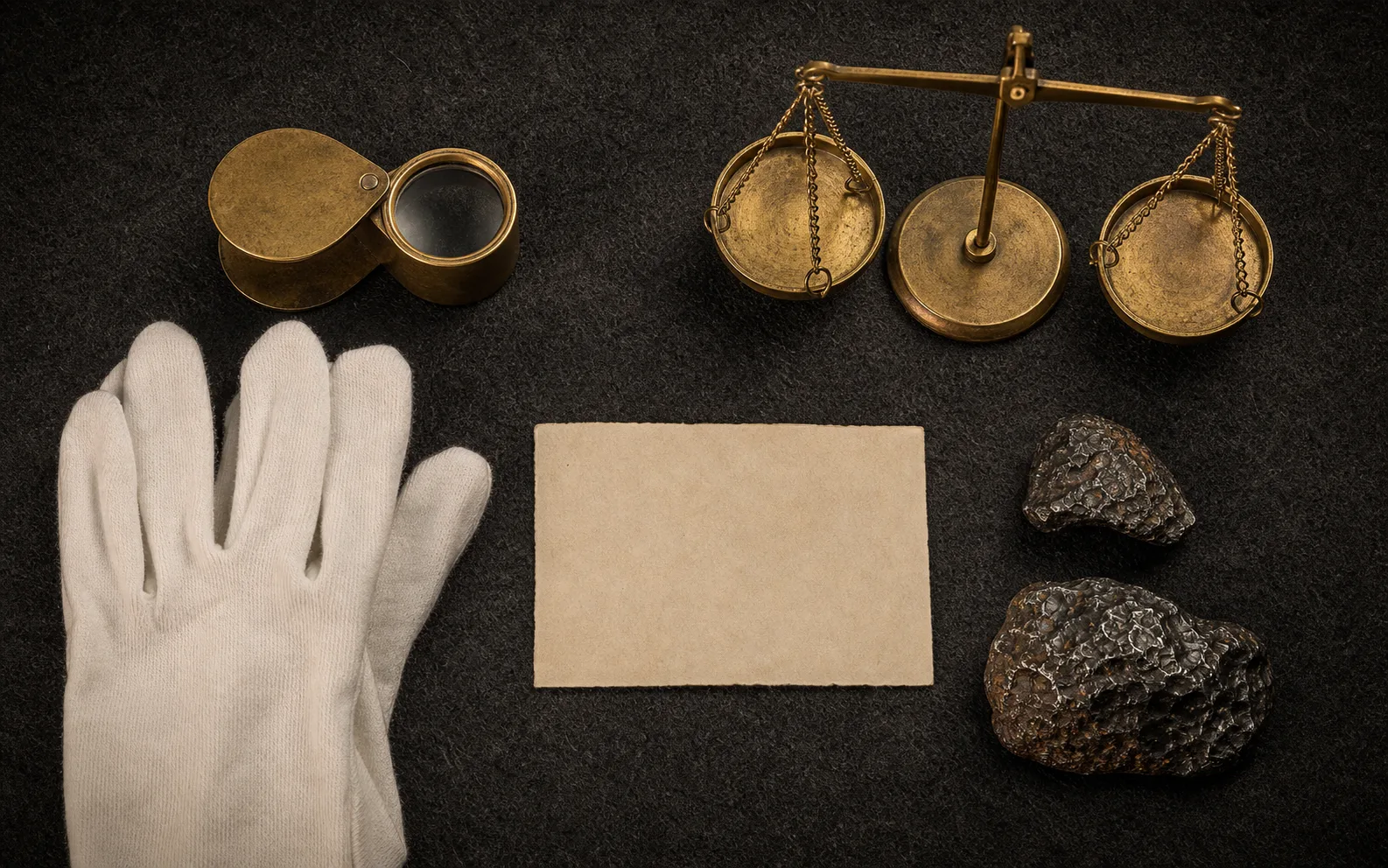
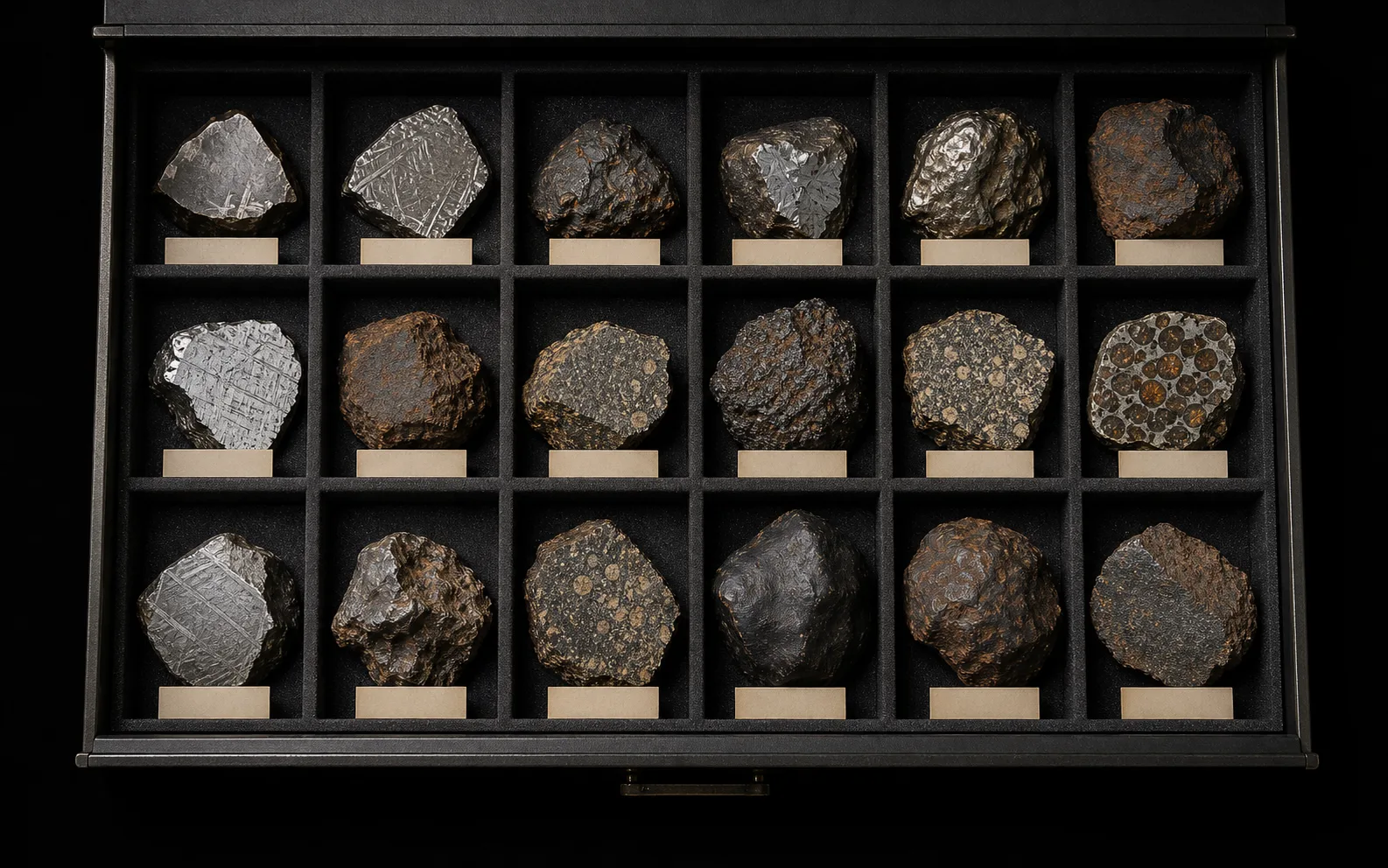
The whole game is keeping humidity low and stable. Store irons and pallasites below about 50% relative humidity — a sealed case or box with rechargeable silica gel does the job cheaply, and a small hygrometer tells you it is working. Never wash an iron in water, never store it in a damp cellar or a sunny window that sweats condensation, and always handle it with cotton or nitrile gloves, because the salt in a fingerprint is enough to start a fresh spot.
If rust does appear, catch it early: dry the piece thoroughly, and for active weeping, a soak in a dehumidified environment or a light coat of a moisture-displacing conservator's wax buys time. A stable iron kept dry will outlast you comfortably; a neglected one in a humid room can visibly deteriorate in a single winter. The routine is minutes a month, and it is the difference between a specimen and a stain.