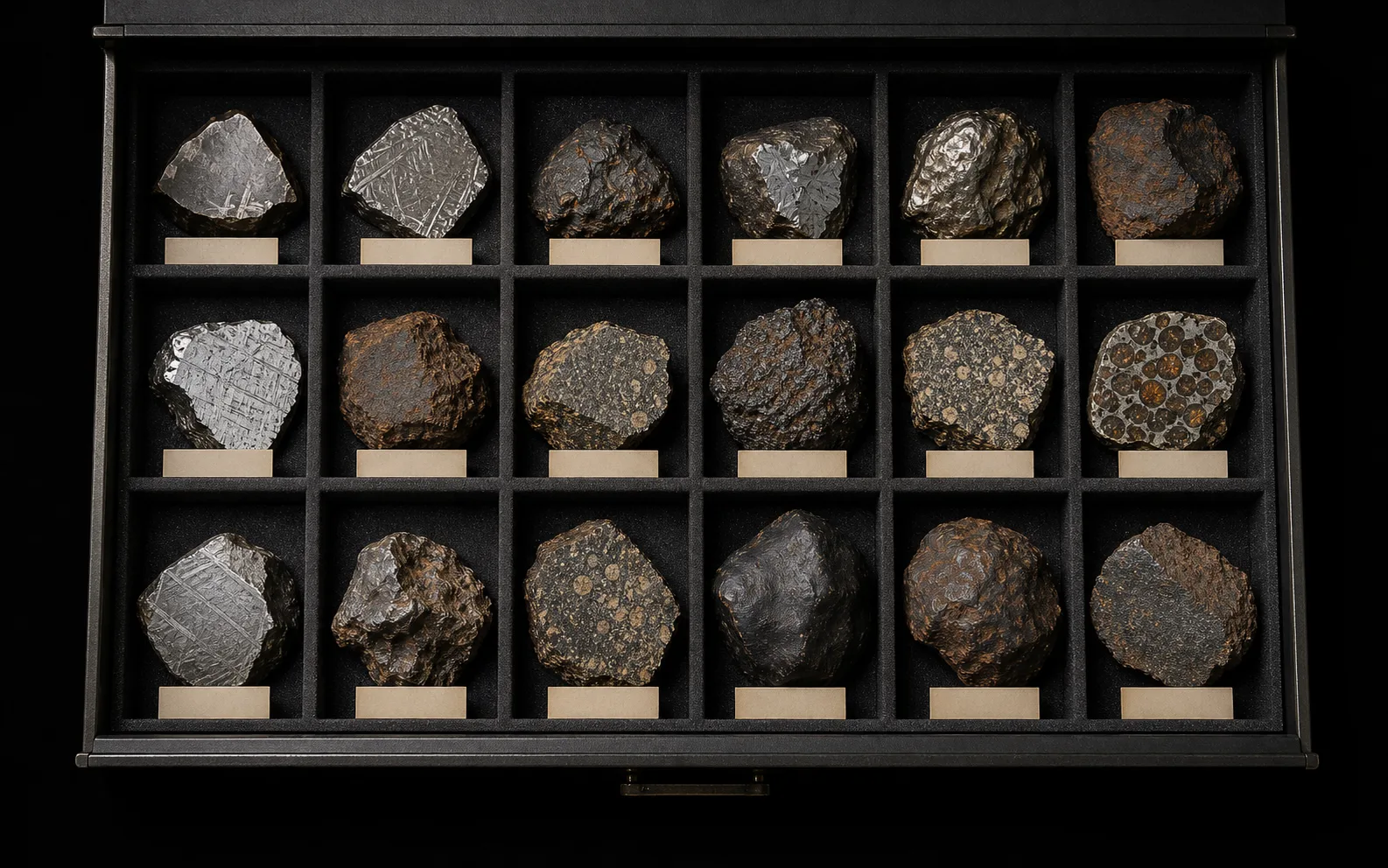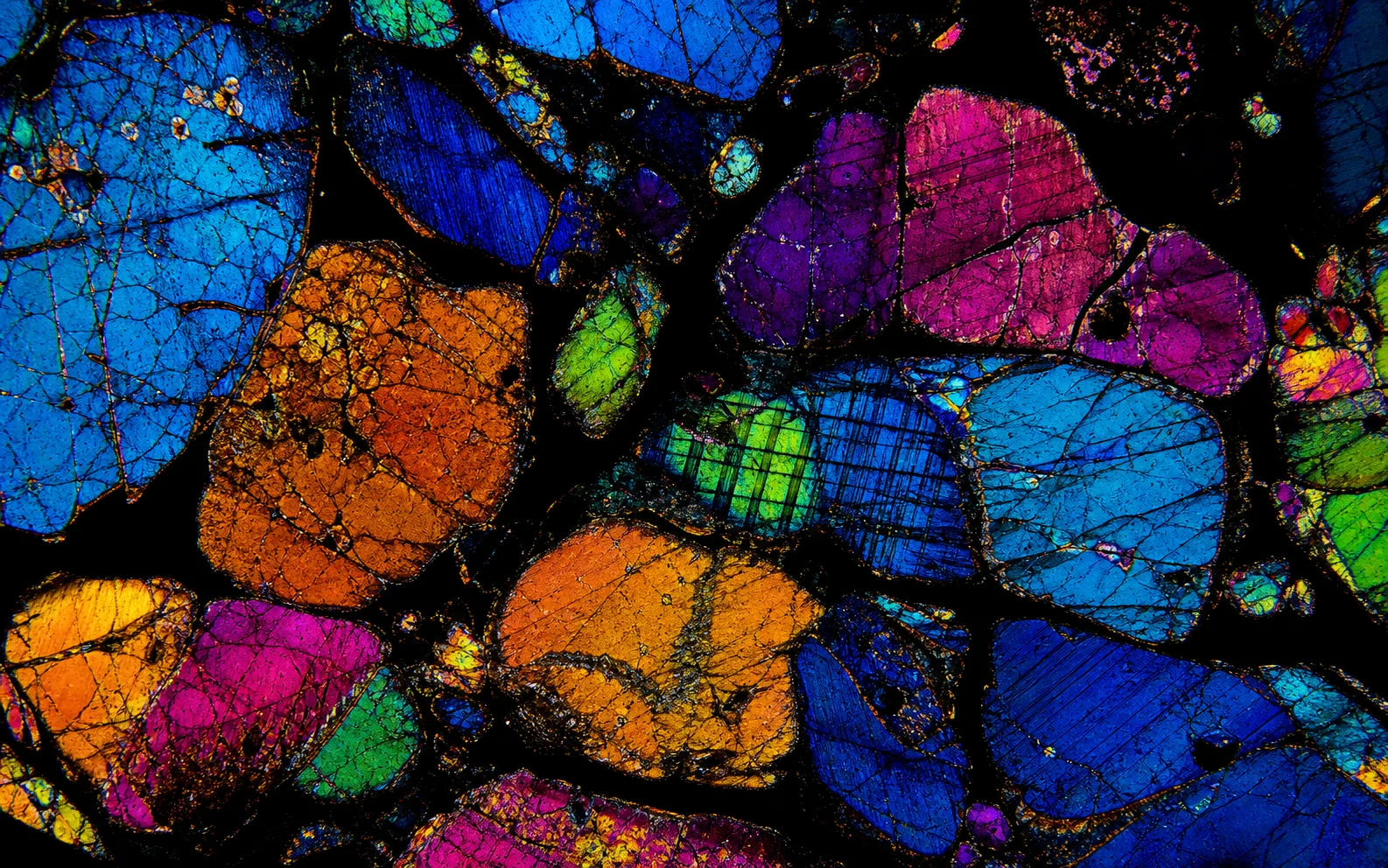
The cryptic codes on a specimen label are a compact scientific fingerprint, and learning to read them turns a shopping decision into an informed one. Stony chondrites carry a letter and a number, like 'L6'. The letter is the group — H, L or LL for the ordinary chondrites, in decreasing order of iron content — and the number, 3 to 6, is the petrologic type: how much heat altered the parent body, from pristine (3) to thoroughly cooked (6). A 'CV3' is a carbonaceous chondrite, group V, still pristine.
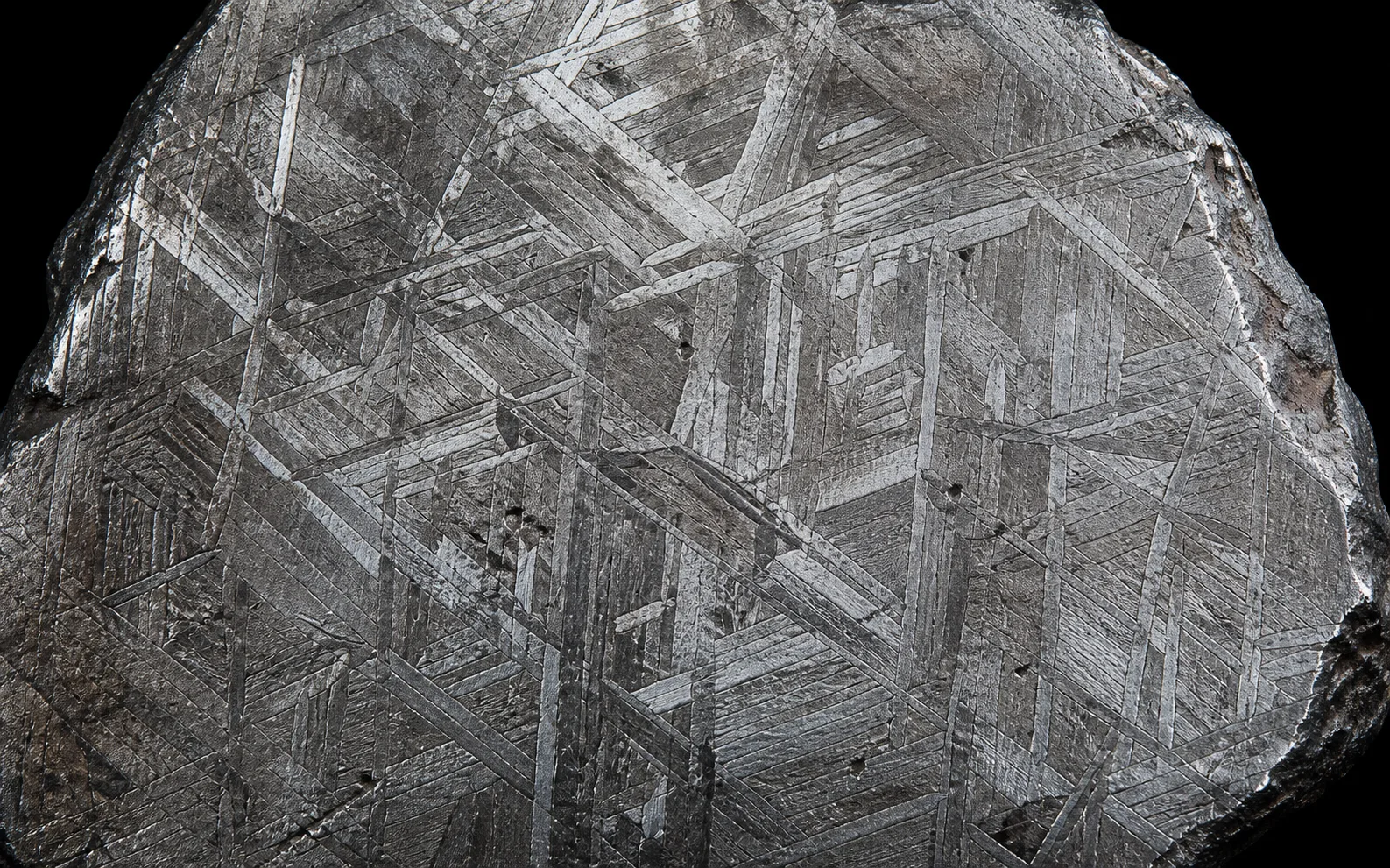
Irons use Roman-numeral-and-letter groups like IVA or IIAB, which sort them by chemistry — trace elements like gallium, germanium and nickel that point to a shared parent body. Structurally they are also described by their band width when etched: from coarse octahedrite down to fine. Achondrites — the melted meteorites, including the lunar and Martian pieces — get named groups of their own, like shergottite or eucrite.
For a buyer the crucial thing is that every properly classified meteorite has an official name and an entry in the Meteoritical Bulletin, the field's central database. Before you spend real money, look the name up: confirm the classification, the total known weight, and the find details match what the seller claims. A specimen that cannot be found in the Bulletin is not necessarily fake — but it is unclassified, and you should pay accordingly and know what you are buying.