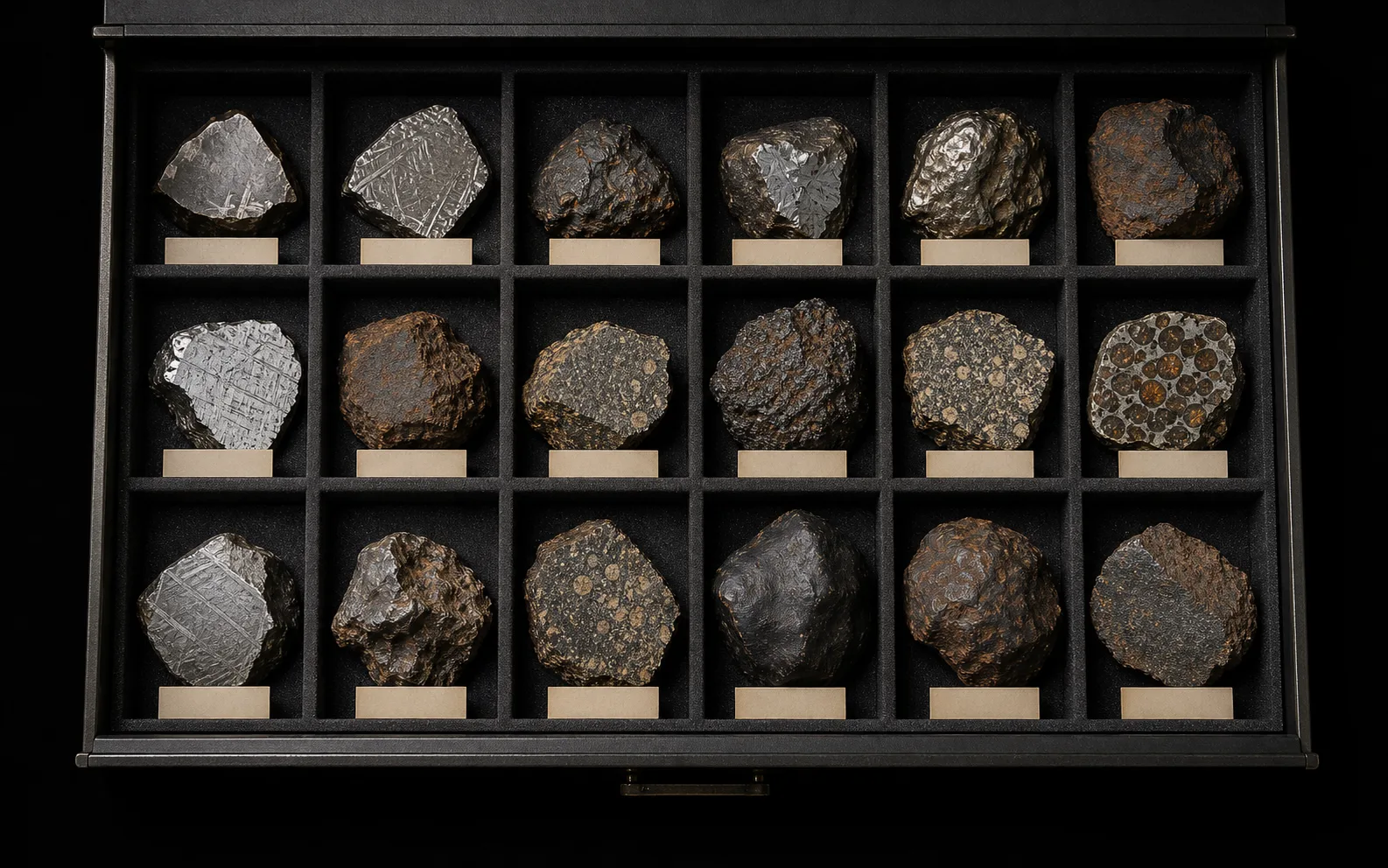
Most rocks people are certain are meteorites are, gently, not. The good news is that a handful of simple tests will clear up almost every case at the kitchen table. Start with a magnet: nearly all genuine meteorites contain enough metallic iron to tug a strong magnet noticeably. No magnetic pull at all is the fastest way to rule a rock out — though a pull on its own proves nothing, because plenty of earthly rocks are magnetic too.
Next, look for a fusion crust: a thin, dark, matte rind, like a shell, formed as the outside melted during entry. Fresh falls have a black eggshell crust; desert finds weather to brown. Then try the streak test — rub the rock on unglazed porcelain tile. A red or brown streak means hematite, and hematite is the single most common meteorwrong. A real meteorite leaves essentially no streak.
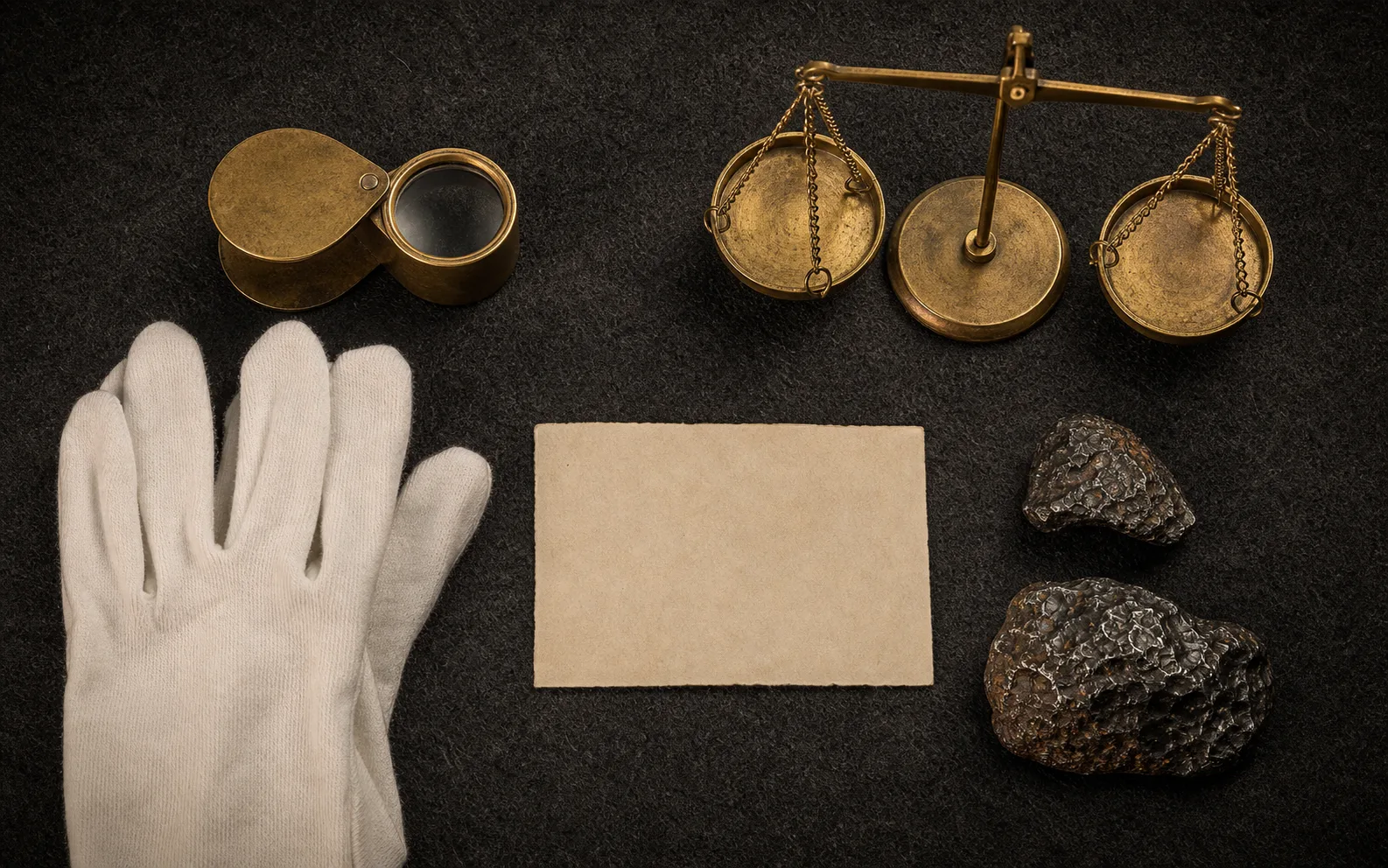
Finally, weigh it in your hand and look for the tells of slag: meteorites are dense, and they never contain bubbles or vesicles. If your rock is light for its size, or full of holes, it is industrial slag — the second most common false alarm. If a specimen passes the magnet, crust, streak, density and no-bubbles tests, then it is worth the cost of a proper classification. Only a lab can confirm it, but these five checks will save you the fee on the obvious no's.