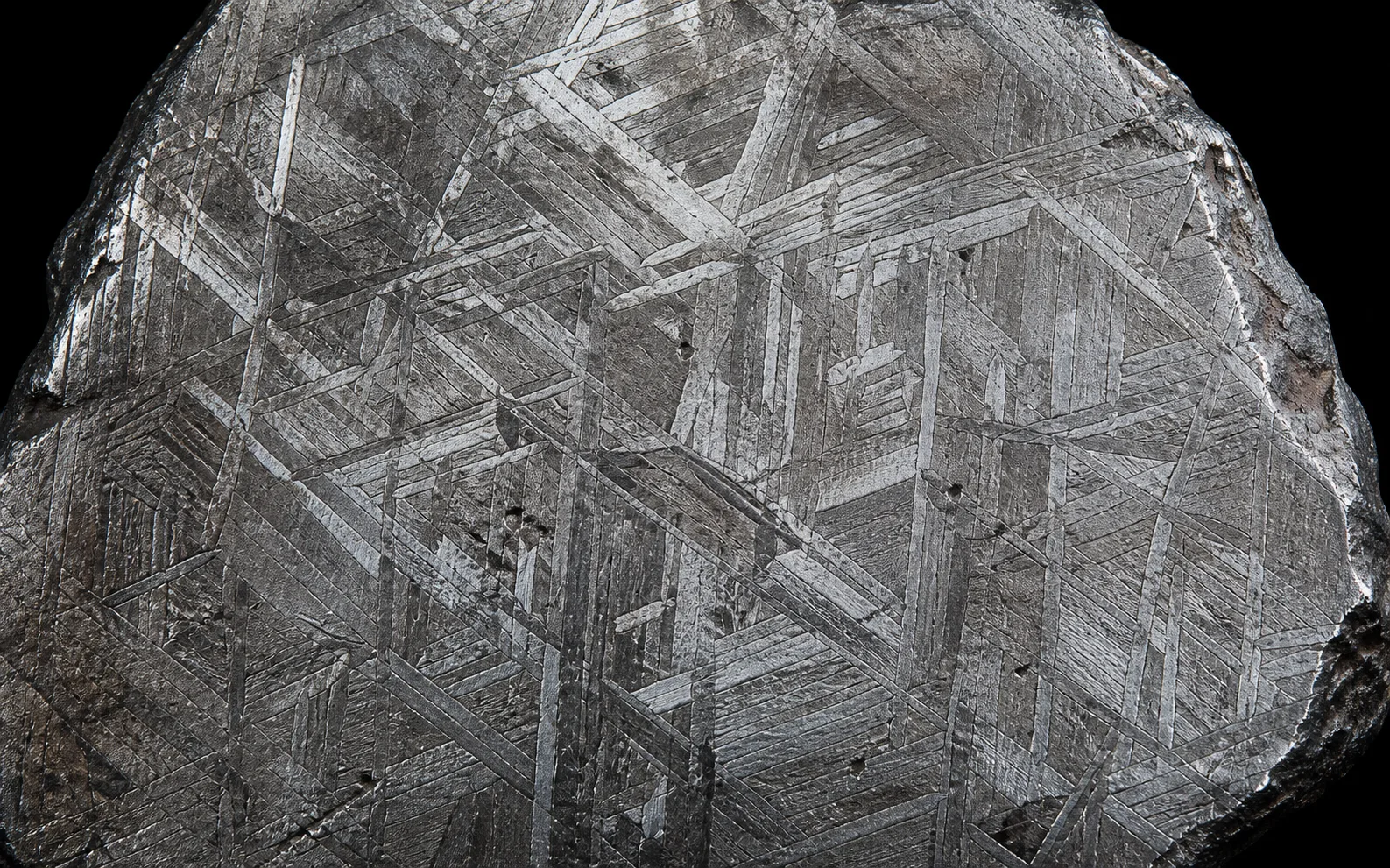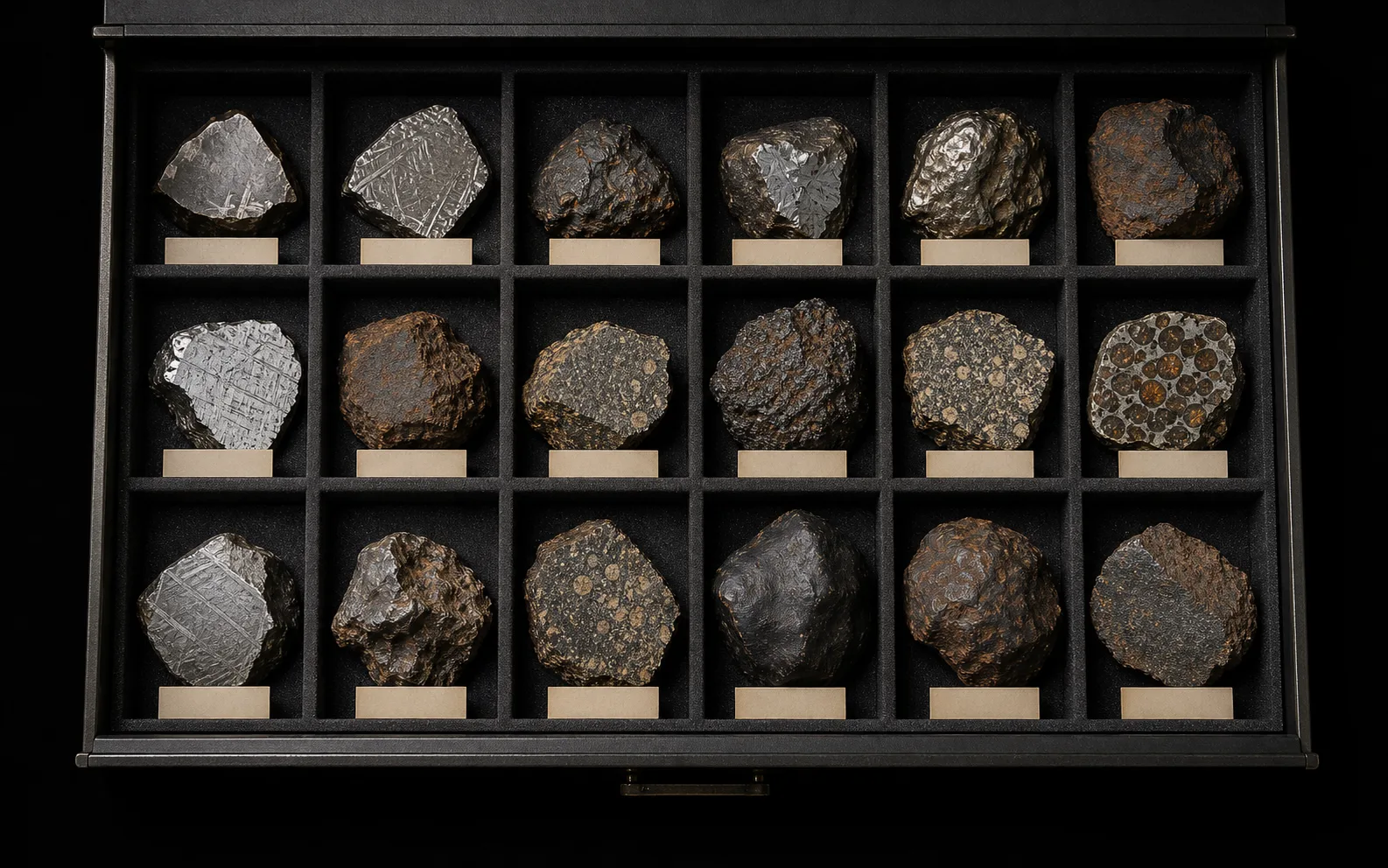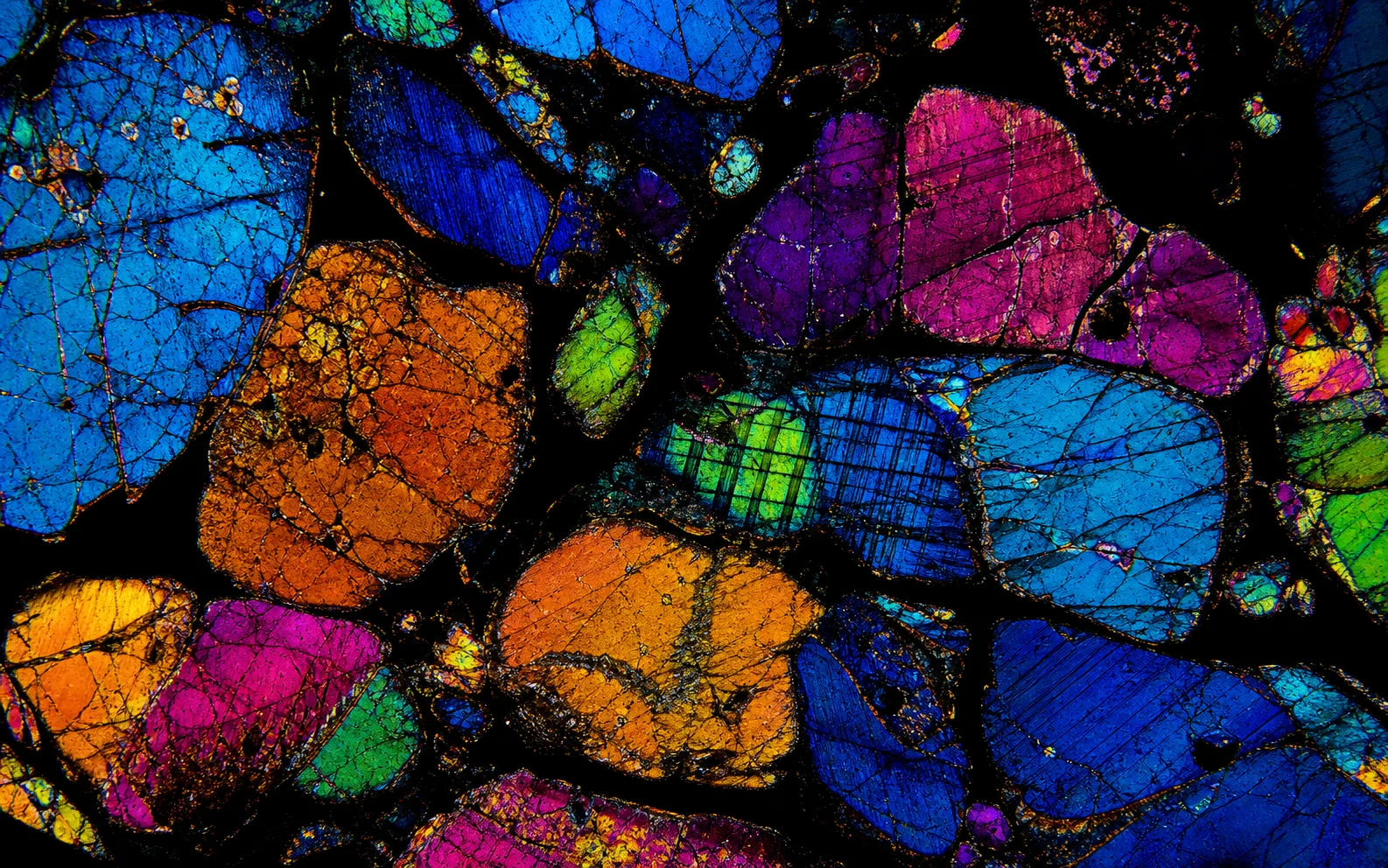
Almost everything that falls comes from the asteroid belt between Mars and Jupiter, where collisions over billions of years chip fragments off asteroids and nudge them onto orbits that eventually cross Earth's. The stony chondrites are pieces of asteroids that never melted; the irons and pallasites are the cores and core-mantle boundaries of larger asteroids that did melt, differentiate like a tiny planet, and then shatter. Hold an iron and a chondrite together and you are holding the inside and the outside of a broken world.
A small, precious fraction comes from much closer to home. Impacts on the Moon and Mars occasionally hit hard enough to launch surface rock past escape velocity; a fraction of that debris drifts inward and, after a spell in space, falls to Earth. We can prove these origins: lunar meteorites match the Apollo samples, and Martian ones carry trapped gas that matches the Martian atmosphere. These are the rarest collectable meteorites, and the most expensive per gram.
Comets, by contrast, deliver almost nothing solid enough to survive to the ground — they give us meteor showers, the streaks of light, rather than meteorites, the rocks. And tektites, confusingly, are not space rocks at all but Earth glass melted by an impact. Knowing which bucket a specimen falls into is the first thing to understand about it — and it is what the classification, read properly, is telling you.