Meteorites split into two categories that matter enormously to a collector. A 'fall' is a meteorite someone saw come down and recovered soon after — the fireball was witnessed, the stones were picked up fresh, and the date is known to the day. A 'find' is a meteorite discovered on the ground with no record of when it landed, which could be last year or fifty thousand years ago. Both are real meteorites; they are simply very different specimens.
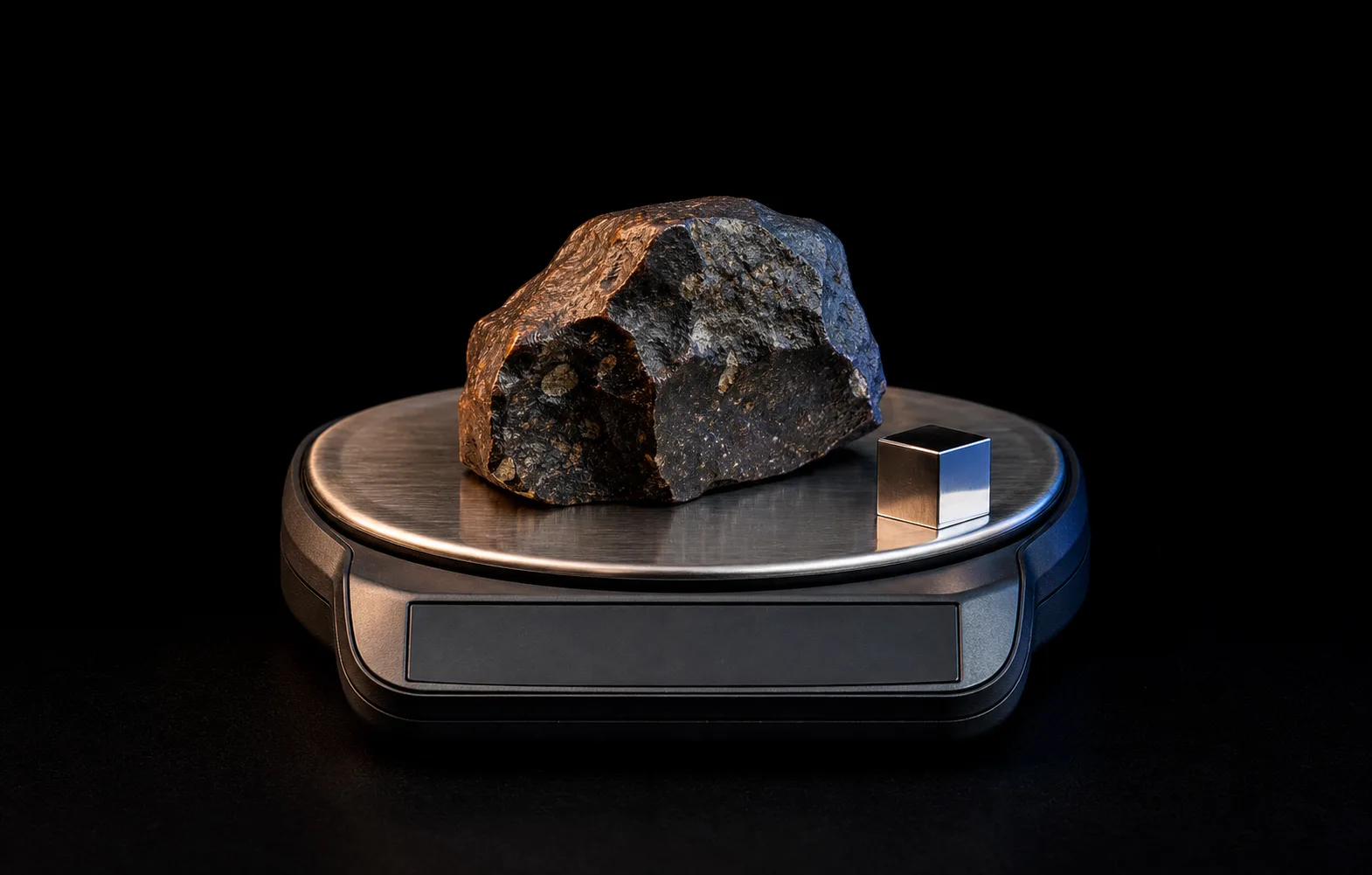
Freshness is the practical difference. A witnessed fall recovered quickly is pristine: crisp black fusion crust, an unweathered interior, minimal terrestrial rust. A desert find of the same type has spent millennia soaking up groundwater and oxygen, so its crust is browned and its metal is partly rusted — still scientifically valuable, still beautiful, but altered. Falls command a premium precisely because they are the unweathered version, and because there are far fewer of them.
For most collecting, good finds are the sensible backbone: they are affordable, plentiful, and cover every class. Save the premium for a fall when the specimen is special — a famous historic event, or a fresh crust so perfect it looks like it landed yesterday. Just know which you are buying, because 'fall' and 'find' on a label are the single biggest driver of why two specimens of the same meteorite type can differ tenfold in price.